 how-to
How to Prove Income for Child Support: A Step-by-Step Guide
Table of Contents
- Why Income Documentation Matters in Child Support Cases
- Child Support Income Verification Documents You'll Need
- How to Prove Hidden Income for Child Support
- The Discovery Process: Requesting Income Documentation
- Imputing Income for Child Support When Documents Are Missing
- State-Specific Requirements and Federal Guidelines
- What Happens When a Parent Refuses to Provide Proof
- Frequently Asked Questions
Last Updated: August 20, 2026
Why Income Documentation Matters in Child Support Cases
Proving income for child support is the foundation of every child support calculation. The amount a parent owes depends directly on what they earn, which is why courts require clear, verifiable documentation. Without solid proof, you're vulnerable to underpayment, modification disputes, or contempt charges.
Courts in every state follow federal child support guidelines that tie payments directly to gross income. Whether you're establishing support for the first time, modifying an existing order, or defending against a modification request, the documentation you provide will determine the outcome. Incomplete or questionable records give the other party ammunition to challenge your claim or request adjustments.
This guide walks you through exactly what documents courts accept and how to present them effectively in child support proceedings.
Child Support Income Verification Documents You'll Need
Courts require multiple forms of documentation to verify income because no single document tells the complete financial story. Different income sources require different proof.
Tax Returns and W-2 Forms
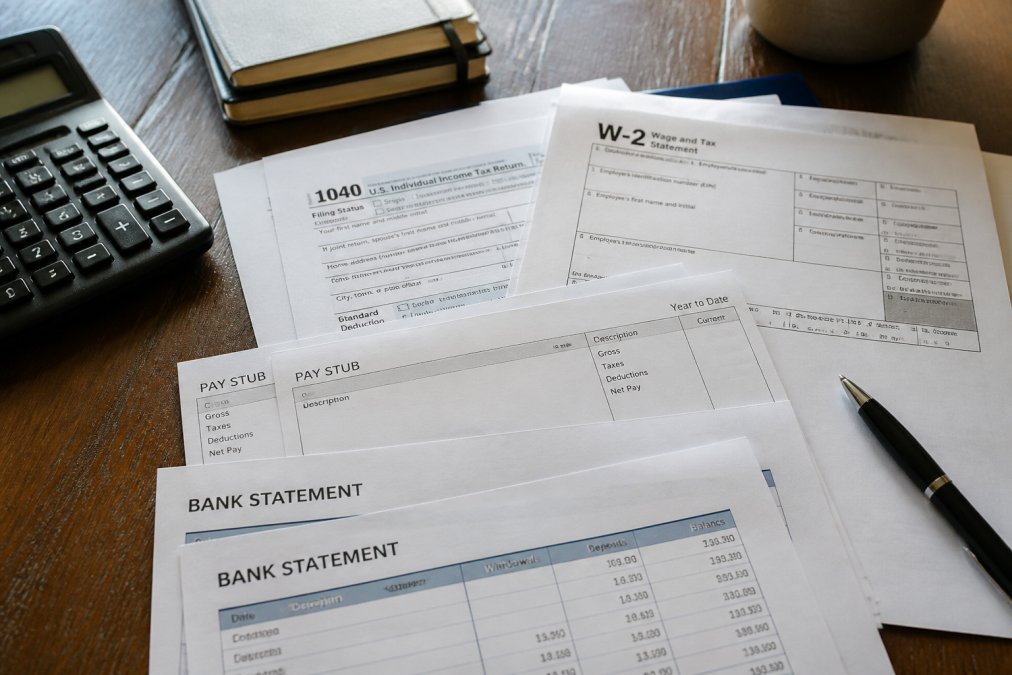
Tax returns are among the strongest income documents because they're filed under penalty of perjury. For child support cases, you'll typically need the last two to three years of federal tax returns. W-2 forms from your employer show exactly what you earned in wages and match what you reported on your tax return.
One critical point: tax returns show what you reported to the IRS, not necessarily what you currently earn. If you've changed jobs, received a raise, or started a new business since your last return, tax documents alone won't capture your current income.
Pay Stubs and Wage Statements
Current pay stubs are essential for showing your actual earnings right now. Courts want documentation from the most recent pay period available, typically within the last 30 days. If you're hourly, provide stubs covering several weeks to show typical earnings, especially if your hours vary seasonally.
Self-employed individuals should provide detailed income statements from their accounting system or bookkeeper showing gross revenue minus business expenses, resulting in net self-employment income.
Self-Employment Income and Profit-and-Loss Statements
If you're self-employed, own a business, or earn commission income, profit-and-loss statements become critical documentation. A P&L statement shows your total revenue, itemized business expenses, and net profit. Prepare P&L statements for the past two to three years and include documentation supporting your claimed expenses: receipts, invoices, utility bills for a home office, or equipment purchases.
Commission income requires documentation showing your base salary plus commission earnings over the past 12 months. If commission varies significantly, courts may average your earnings over multiple years or impute income based on what you're capable of earning in your industry.
Rental income, investment income, and income from other sources must be documented with appropriate statements: 1099 forms for rental properties, brokerage statements for investments, or business income statements for side businesses.
Bank Statements and Financial Records
Bank statements serve as secondary verification of income. They show deposits that correlate with your reported earnings and can reveal income sources you might have missed. Provide 6 to 12 months of bank statements for every account where you receive income deposits. Highlight deposits that represent income rather than transfers between your own accounts or borrowed money.
Financial records also include investment account statements, retirement account statements, and statements from any other accounts holding assets. These can reveal additional income sources or demonstrate financial capacity that affects child support calculations.
How to Prove Hidden Income for Child Support
When income documentation seems incomplete, inconsistent, or deliberately obscured, courts have tools to uncover what's actually being earned.
Identifying Cash and Under-the-Table Income
Cash income is the most difficult to document because it leaves no paper trail. Courts recognize this pattern and look for indirect evidence. Common indicators of unreported cash income include lifestyle inconsistencies: a parent claims low income but drives an expensive vehicle, lives in a high-value home, or maintains an expensive lifestyle. Bank deposits that don't match reported income also signal hidden earnings.
To prove hidden cash income, gather evidence of the parent's actual spending and lifestyle. Document large purchases, property ownership, vehicle registrations, and regular expenses. Compare these to the income they've claimed. Subpoena records from businesses where the parent works; restaurants, bars, salons, and service businesses often have records showing cash tips or payments even if the employee claims they weren't reported.
Using Digital Evidence and Forensic Accounting
Digital evidence increasingly reveals hidden income. Social media posts showing expensive purchases, vacations, or lifestyle indicators can contradict claims of low income. Screenshots of online sales platforms, freelance work sites, or payment apps can document income the parent hasn't disclosed.
Forensic accountants analyze financial records to identify hidden income. They review bank deposits, credit card statements, tax returns, and business records to find patterns and calculate how much money actually flowed through accounts versus what was reported as income. Forensic accounting is particularly useful in cases involving business ownership, investment income, or complex financial arrangements.
Request discovery of the other parent's financial records through the court. This includes bank statements, credit card statements, brokerage statements, business records, and tax returns. Compare what they claimed as income to what actually appears in their financial records.
The Discovery Process: Requesting Income Documentation
Discovery is the formal process of requesting and exchanging financial information before trial. It's where you obtain the documentation you need to prove or challenge income claims.
Get Your Free Consultation Now →

Subpoenas and Court-Ordered Disclosure
A subpoena is a court order requiring someone to provide documents or testify. In child support cases, you can subpoena an employer to provide employment records, wage information, and benefits documentation. You can subpoena a bank to provide account statements. You can subpoena the other parent's accountant or bookkeeper to provide business records.
Subpoenas are powerful because they compel production of documents the other parent might otherwise refuse to provide. Work with your attorney to draft subpoenas that are specific and reasonable. A subpoena for "bank statements for account ending in 4567 for the past 12 months" is specific and enforceable. Serve subpoenas on third parties and provide notice to the other parent's attorney. The third party has a set time, usually 10 to 20 days, to respond. If they don't respond, you can file a motion to compel and request sanctions.
Financial Affidavits and Legal Requirements
A financial affidavit is a sworn statement detailing your income, expenses, assets, and liabilities. Courts require both parents to complete a financial affidavit in child support cases. The affidavit is signed under penalty of perjury, making false statements a serious matter.
Your financial affidavit must match your supporting documentation. If you claim $5,000 monthly income on your affidavit, your pay stubs, tax returns, and bank statements must support that figure. Complete your affidavit carefully and honestly, listing every source of income and attaching copies of supporting documents.
The other parent's financial affidavit must also be supported by documentation. If their affidavit claims income that doesn't match their tax returns or pay stubs, you can challenge it.
Imputing Income for Child Support When Documents Are Missing
Sometimes a parent refuses to provide documentation, claims they have no income, or provides documents that seem incomplete. Courts have the authority to impute income, determining what someone is capable of earning and using that figure for child support calculations.
Imputation isn't arbitrary. Courts use specific methods: comparing the parent's earning history to their current claims, using labor statistics for their age, education, and job skills, examining their actual lifestyle and spending patterns, or reviewing their work history to establish earning capacity.
If a parent was earning $60,000 annually five years ago and now claims $15,000 with no reasonable explanation, courts may impute income closer to their historical earning level. Provide evidence supporting imputation arguments: tax returns from prior years showing higher income, job postings for positions matching the parent's skills showing typical salaries, or evidence of lifestyle inconsistent with claimed income.
State-Specific Requirements and Federal Guidelines
Child support law varies by state, but all states follow federal guidelines that establish how income is calculated and how child support is determined. Federal guidelines define "gross income" to include wages, self-employment income, rental income, investment income, workers' compensation, unemployment benefits, and various other sources. States may include or exclude certain income sources.
Income withholding is a federal requirement. Once child support is ordered, income withholding orders go to the parent's employer, requiring automatic deduction of child support from their paycheck. Your state's child support agency handles income verification and enforcement and can request income documentation, issue subpoenas, and pursue enforcement actions.
Federal law requires that child support orders include language about modification procedures. If income changes significantly due to job loss, substantial raise, or change in custody, either parent can request modification. You'll need current income documentation to support a modification request.
What Happens When a Parent Refuses to Provide Proof
A parent who refuses to provide income documentation faces serious consequences. Courts view this as contempt and take it very seriously. When a parent refuses to provide documentation despite a court order or valid subpoena, file a motion to compel. This asks the court to order compliance and impose penalties if the parent continues refusing. The court can fine the refusing parent, order them to pay your attorney's fees, or find them in contempt.
Contempt of court is a separate violation from the underlying child support case. A parent found in contempt can face jail time until they comply. If a parent refuses to provide documentation and the court can't compel it, imputation becomes more likely. The court will determine income based on available evidence, and that imputed income will be used for child support calculations, often resulting in higher support obligations than if the parent had simply provided honest documentation.
Document every instance of non-compliance. Keep copies of subpoenas, court orders, and correspondence requesting documentation. Record dates when the other parent was supposed to provide documents but didn't. This documentation strengthens your motion to compel and your arguments for sanctions.
Proving income for child support requires organization, persistence, and understanding of what courts actually need. The stronger your documentation, the more credible your income claim and the less vulnerable you are to challenges or modification requests. If you're facing a complex child support case involving hidden income, inconsistent documentation, or an uncooperative co-parent, Coppins Law Group, PLLC can guide you through the discovery process and help you present compelling evidence to the court. Our team understands Michigan family law and has experience handling cases where income documentation becomes a central issue. Contact us for a free initial consultation to discuss your specific situation and explore how we can protect your rights and interests in child support proceedings.
Frequently Asked Questions
What documents are required to prove income for child support?
The primary documents needed include tax returns (federal and state), W-2 forms, recent pay stubs, and bank statements showing regular deposits. For self-employed individuals, profit-and-loss statements and business tax returns are essential. The court may also require a financial affidavit disclosing all income sources. The specific documents depend on your employment type and what the court orders during the discovery process.
How can I prove my ex is hiding income or working under the table?
Gathering evidence of hidden income requires documentation like bank deposits that don't match reported earnings, lifestyle evidence inconsistent with stated income, and digital records from social media or business accounts. You can also request the opposing party's tax returns and bank statements through the discovery process or subpoena their employer. In complex cases, forensic accounting can trace cash flows and identify unreported income sources that the court will consider when calculating child support obligations.
What is imputing income for child support?
Imputing income means the court assigns an income figure to a parent when they refuse to provide documentation, are unemployed, or appear to be intentionally underemployed. Courts may use prior tax returns, industry averages, or earning capacity to establish an income amount for child support calculation. This prevents parents from avoiding support obligations by hiding earnings or claiming no income when they have the ability to earn.
What happens if a parent refuses to provide proof of income?
If a parent refuses to provide income documentation after a court order, they may face contempt of court charges, fines, or even jail time. The court can also proceed with imputing income based on available evidence, which often results in a higher support obligation than if honest documentation had been provided. Additionally, the non-compliant parent may be ordered to pay the other party's attorney fees for the enforcement action.


