ultimate-guide
Misdemeanor Probation Requirements in Michigan 2026
Table of Contents
- How Michigan Misdemeanor Sentencing and Probation Work in 2026
- Michigan Misdemeanor Probation Conditions You Can Expect
- How Long Is Misdemeanor Probation in Michigan?
- Reporting vs. Non-Reporting Probation: What's the Difference?
- Michigan Probation Violation Consequences: What Happens Next
- Early Termination of Probation in Michigan: How to Ask
- Probation Costs and Payment Options in Michigan
- Statewide Rules vs. County and Judge-Specific Conditions
- Frequently Asked Questions
Last Updated: October 7, 2026
How Michigan Misdemeanor Sentencing and Probation Work in 2026
Misdemeanor probation in Michigan is court-ordered supervision that lets a judge suspend jail time in exchange for compliance with set conditions, typically lasting six to 12 months for a first offense.
A misdemeanor in Michigan is a criminal offense punishable by up to one year in county jail, and most carry a maximum of 90 days or 93 days.
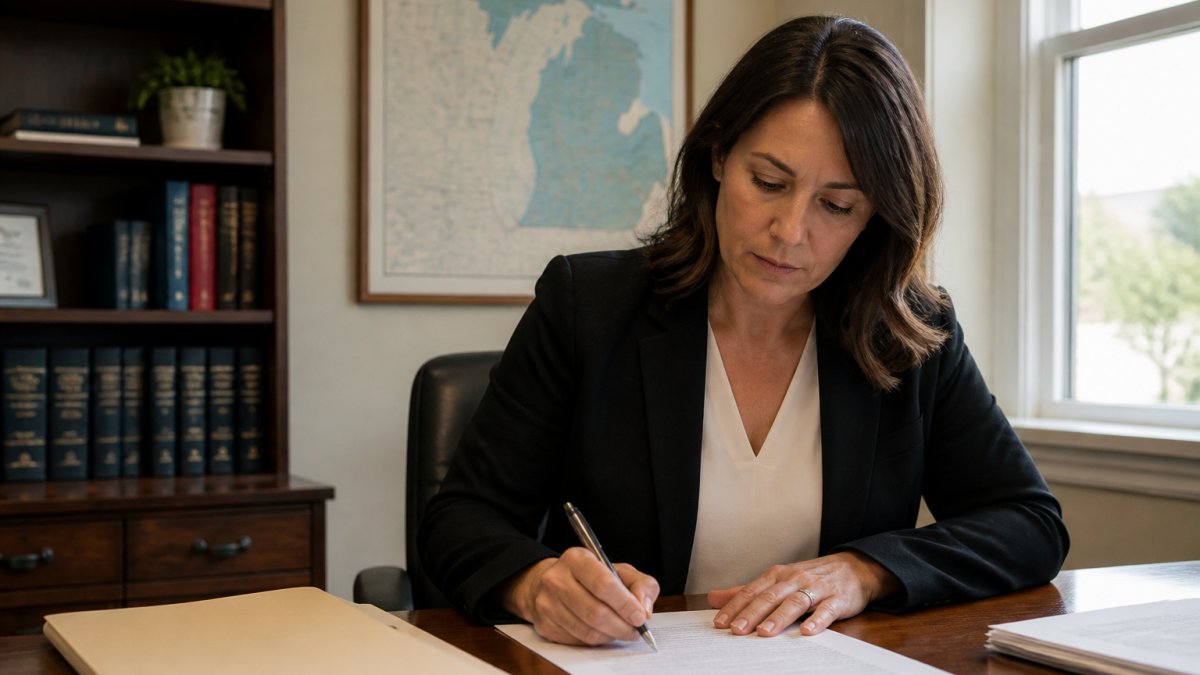
Misdemeanor Classifications and Maximum Penalties
Michigan does not use a lettered misdemeanor class system the way some states do. Instead, the maximum penalty is written into each individual statute. Common examples:
| Offense Type | Maximum Jail | Typical Probation |
|---|---|---|
| Simple assault | 93 days | 6-12 months |
| Retail fraud, third degree | 93 days | 6-12 months |
| OWI, first offense | 93 days | 6-12 months |
| Domestic violence, first offense | 93 days | 12 months |
A judge can impose jail, probation, fines, or a combination. Delayed sentencing is separate: the court accepts a plea but holds the conviction off the record while the person completes probation. Finish successfully and the case can be dismissed.
Delayed Sentencing and the 2026 Court Landscape
District courts have leaned harder on delayed sentence agreements in recent years because they reduce jail populations and give first-time offenders a path to a clean record. But a delayed sentence is not automatic: you or your attorney must ask for it, and the judge must agree the facts support it.
Michigan Misdemeanor Probation Conditions You Can Expect
Michigan misdemeanor probation conditions fall into two buckets: standard conditions that apply to nearly everyone, and special conditions tailored to the offense. The court order lists them, your probation officer enforces them, and missing one risks a violation.
Standard Conditions: Reporting, Fees, and Supervision
Standard conditions usually include:
- Report to a probation officer on a set schedule
- Pay fines, court costs, and probation fees
- Stay employed or in school
Reporting probation means checking in with an officer in person or by phone; non-reporting skips the check-ins but keeps every other condition in force.
Special Conditions: Treatment, Testing, and Community Service
Special conditions depend on the charge: an OWI may require alcohol testing, a substance abuse evaluation, or treatment; retail fraud often brings community service; domestic violence cases frequently include anger management or a batterer intervention program; and theft or property cases can include victim restitution.
How Long Is Misdemeanor Probation in Michigan?
The typical length of misdemeanor probation in Michigan is six to 12 months, though the statute allows up to two years in some cases. The judge sets the term at sentencing based on the offense, your criminal history, and the sentencing guidelines.
A first-time retail fraud or OWI charge usually lands at 12 months; a minor assault might be six months.
Reporting vs. Non-Reporting Probation: What's the Difference?
Reporting probation requires regular contact with a probation officer; non-reporting requires no routine check-ins but keeps every other condition in force. Non-reporting is generally reserved for low-level offenses, first-time offenders, and people who have shown compliance.
The distinction affects your schedule, not your legal obligations: on non-reporting probation you can still be called in, tested, or brought before the judge for a violation.
Michigan Probation Violation Consequences: What Happens Next
A suspected probation violation does not automatically send you to jail, but it triggers a formal court process you should treat as urgent. Michigan separates violations into two categories, and the category drives the court's response.
- Technical violations are failures to follow a condition: missed appointments, unpaid fees, a positive drug test, skipped community service, or leaving the state without permission.
- New-offense violations happen when you are arrested or charged with a new crime while on probation. These are treated more seriously because they suggest the supervision is not working.
The Violation Process, Step by Step
- The probation officer files a violation notice. The officer documents the alleged violation and submits it to the sentencing court. Some issue a warning first for minor technical issues; others file immediately.
- The court reviews the notice and decides on a hold. For a serious or new-offense violation, the judge may issue a bench warrant and set a bond. For a minor technical violation, the court may simply schedule a hearing and let you remain free on your existing conditions.
- You receive notice of the hearing. Under Michigan court rules, you are entitled to notice of the alleged violation and an opportunity to be heard. If you cannot afford an attorney, ask about appointed counsel, because revocation can lead to jail time.
- A preliminary or arraignment hearing may occur first. In many district courts, the judge holds a brief hearing to confirm you understand the allegation, address bond, and set the evidentiary hearing date. This is where you or your attorney can request a continuance to gather records.
- The evidentiary hearing is held. The prosecutor or probation officer presents evidence of the violation. The standard of proof is lower than a criminal trial, and hearsay from the probation officer is often admitted. You have the right to present evidence and witnesses.
- The judge decides the outcome. Possible results include continuing probation unchanged, adding conditions, extending the term, ordering a short jail sanction, or revoking probation entirely.
What Revocation Actually Means
Revocation is the most serious outcome: the court can impose the jail sentence originally suspended, up to the statutory maximum for the underlying misdemeanor. For most misdemeanors that is 90 or 93 days, but some offenses carry up to one year in county jail.
A middle-ground outcome is a jail sanction or shock probation: a short jail stay, often a few days to a few weeks, followed by reinstated probation.
What to Do If You Are Accused of a Violation
- Read the violation notice carefully and identify exactly which condition is alleged to have been broken.
- Gather documentation: payment receipts, appointment confirmations, treatment completion letters, and proof of employment or school enrollment.
- Contact an attorney before the hearing, who can negotiate with the probation officer, seek a reduction to a technical violation, or argue for reinstatement rather than revocation.
A single technical violation rarely ends in revocation for a first-time offender who shows up and takes responsibility. Cases go badly when the person ignored the notice or committed a new offense while on supervision.
Early Termination of Probation in Michigan: How to Ask
Early termination of probation in Michigan is possible but not guaranteed: the court can discharge you before the term ends if you completed all conditions and stayed clean.
The practical steps:
Get Your Free Consultation Now →
- Confirm every fee, fine, and restitution obligation is paid in full
- Finish all required treatment, testing, and community service
- Gather proof of compliance from your probation officer
Judges look favorably on a clean record and completed conditions, especially for a first-time offender, but not on a request filed three months into a 12-month term.
Probation Costs and Payment Options in Michigan
Probation is not free, and the money side trips up a lot of people. The costs fall into distinct buckets that are set, collected, and enforced differently.
The Four Cost Buckets
- Fines are the punishment component, set by statute and by the judge within that range.
- Court costs are administrative charges covering processing, varying by court and case.
- The crime victim rights assessment is a state-mandated fee imposed on convictions, set by statute and separate from restitution.
Because supervision fees and court costs are set locally, we do not quote a single statewide number. The sentencing order and the court's fee schedule are authoritative, and your probation officer can confirm your monthly obligation.
How Payment Usually Works
Most district courts allow monthly installments rather than a lump sum, typically applied first to fines and costs, then supervision fees, with restitution handled separately. Some courts use third-party collection or accept online payments.
If you cannot pay, staying silent is the worst move. Michigan courts must consider a person's ability to pay before imposing certain sanctions for nonpayment, and a judge can modify the schedule, waive some costs, or order community service instead.
What Happens If You Do Not Pay
Unpaid financial obligations are among the most common technical violations. The probation officer can file a notice, and the judge can extend probation, add community service, or impose a jail sanction. The court cannot jail someone solely because they are poor, but it can jail someone who willfully refused to pay or ignored court orders, which is why documenting your income and expenses matters.
Practical Steps to Stay Current
- Get the full fee breakdown from the sentencing order and the court's fee schedule
- Set up a payment plan through the court before the first payment is due
- Keep every receipt and payment confirmation
Getting ahead of the money side of probation is one of the simplest ways to avoid a violation. Courts respond well to people who communicate and poorly to people who disappear.
Statewide Rules vs. County and Judge-Specific Conditions
Michigan's statutes set the outer limits, but the conditions you live under come from the judge in your case. Two people charged with the same misdemeanor in different counties can end up with very different probation terms.
What varies most:
- Whether probation is reporting or non-reporting
- How often you test
- Which treatment programs are required
Misdemeanor probation is manageable when you understand the conditions before you sign the order, not after you violate one. If you are facing charges in Southeast Michigan or trying to sort out a probation problem, Coppins Law Group, PLLC offers a free initial consultation, statewide service, and trial-prepared defense backed by Super Lawyers selection from 2021 through 2025.
Frequently Asked Questions
What are the requirements for misdemeanor probation in Michigan?
Requirements typically include reporting to a probation officer, paying fines, fees, and restitution, completing community service, attending treatment or counseling, submitting to drug and alcohol testing, and obeying all laws. Judges can also impose special conditions like curfews, travel restrictions, or no-contact orders. The exact terms are set at sentencing and vary by court and judge.
How long can misdemeanor probation last in Michigan?
Under Michigan law, misdemeanor probation can last up to two years for a 93-day misdemeanor and up to one year for a 90-day misdemeanor. Courts often impose shorter terms, such as six to 12 months, especially for first-time offenders. The judge sets the length based on the offense and your background.
Do you have to meet with a probation officer on misdemeanor probation in Michigan?
Not always. Some sentences allow non-reporting probation, where you check in by phone, mail, or online. Reporting probation requires regular in-person meetings, sometimes monthly or quarterly. The judge decides which type you receive. Even on non-reporting probation, you must follow all conditions and respond to any court notices.
Can a judge require drug testing or treatment as a condition of misdemeanor probation?
Yes. Michigan judges can order drug and alcohol testing, substance abuse treatment, mental health counseling, or anger management as special conditions of probation. These are common in OWI, retail fraud, and domestic violence cases. You are responsible for the cost of testing and treatment unless the court waives fees based on ability to pay.
What happens if you violate misdemeanor probation in Michigan?
If your probation officer suspects a violation, they may file a notice with the court. You are entitled to a hearing where the judge decides whether a violation occurred and what consequences to impose. Penalties can include jail time, extended probation, added conditions, or revocation of probation. The original misdemeanor sentence may be imposed.
Can misdemeanor probation be ended early in Michigan?
Yes, early termination is possible. You or your attorney can file a motion asking the judge to discharge you before your term ends. Courts consider factors like completing all conditions, paying all costs, and staying violation-free. Early termination is not guaranteed; it depends on the judge and your compliance record.
Can you travel while on misdemeanor probation in Michigan?
Travel rules vary. Some judges allow in-state travel without permission but require approval for out-of-state trips. Others impose strict travel restrictions. Always check your probation order. If you need to travel, request permission from your probation officer or file a motion with the court well in advance.
Do misdemeanor probation requirements vary by court in Michigan?
Yes. While Michigan law sets the maximum penalties, each district court and judge can impose different conditions. Some courts emphasize community service, others focus on treatment or testing. Always review your specific sentencing order and ask your attorney about local practices in your county.