 ultimate-guide
Legal Options for First-Time Misdemeanor Offenses: A Complete Guide
Table of Contents
- Understanding Your Legal Options for First-Time Misdemeanor Offenses
- First-Time Offender Programs and Pretrial Diversion Options
- Misdemeanor Penalties for First-Time Offenders
- Working with a Criminal Defense Attorney for Your First Misdemeanor
- Misdemeanor Expungement and Record Sealing
- Alternative Sentencing: Community Service and Conditional Discharge
- State-by-State Variance: Know Your Local Laws
- Financial Costs and Legal Fee Breakdown
- Frequently Asked Questions
Last Updated: July 29, 2026
Understanding Your Legal Options for First-Time Misdemeanor Offenses
If you've been arrested for a misdemeanor, you're facing one of the most critical decisions of your life. Legal options for first-time misdemeanor offenses exist that can significantly reduce the impact on your future. This guide from Coppins Law Group, PLLC covers the pathways available to first-time offenders, from diversion programs to expungement, so you understand exactly what's possible in your situation.
A criminal conviction can affect employment, housing, professional licensing, and educational opportunities for years. But the law recognizes that first-time offenders deserve alternatives to traditional prosecution. According to the Bureau of Justice Statistics, many jurisdictions have implemented programs to redirect these cases away from incarceration.
At Coppins Law Group, PLLC, we've guided hundreds of first-time offenders through these options. The strategies we cover have helped clients avoid conviction records, reduce penalties, and move forward with their lives intact.
Why Your First Offense Matters
Your first misdemeanor charge is fundamentally different from a subsequent one. Courts, prosecutors, and judges treat first-time offenders differently because the law recognizes rehabilitation potential. Many jurisdictions offer pretrial diversion and first-time offender programs that allow you to avoid conviction entirely.
Your eligibility for these programs often expires quickly. Courts typically require you to apply or be referred to diversion programs within 30-60 days of arrest. Missing this window can cost you the opportunity entirely. This is where having a criminal defense attorney becomes critical.
The Immediate Impact: Criminal Record and Background Checks
A criminal record follows you everywhere. Employers, landlords, educational institutions, and licensing boards all conduct background checks. A misdemeanor conviction is not the same as an arrest. An arrest shows up on background checks, but a conviction is permanent unless you take action to seal or expunge it.
Many employers use blanket policies that reject any applicant with a criminal conviction. Healthcare providers, schools, financial institutions, and government agencies have even stricter requirements. Housing discrimination based on criminal records is legal in most states, and landlords routinely deny applications to anyone with a conviction.
First-Time Offender Programs and Pretrial Diversion Options
Pretrial diversion is the single most valuable option available to first-time offenders. This program allows you to avoid prosecution entirely by meeting specific conditions set by the court or prosecutor. If you complete the program successfully, the charges are typically dismissed, and you can legally say you were never convicted.
What Pretrial Diversion Means for Your Case
Pretrial diversion works like this: instead of proceeding to trial or entering a guilty plea, you agree to complete a structured program. This might include community service, counseling, classes, restitution, or probation. The critical advantage is that diversion keeps you out of the criminal justice system. You're not convicted, and the case doesn't result in a permanent criminal record. Once you complete the program, prosecutors dismiss the charges.
However, diversion is not a free pass. You must comply with every requirement. Missing a court date, failing a drug test, or not completing community service can result in the charges being reinstated and prosecution moving forward.
Eligibility and Application Process
Not every first-time offender qualifies for diversion. Eligibility depends on the specific misdemeanor charge, your criminal history, and local program requirements. Violent offenses, DUI, and domestic violence charges often disqualify you. Nonviolent offenses like theft, fraud, drug possession, or disorderly conduct typically qualify.
Your criminal history matters. If you have prior arrests or convictions, even if they were dismissed or sealed, they may affect your eligibility. Juvenile records and arrests that didn't result in conviction usually don't count against you.
The application process typically works like this:
- Early filing, Your attorney requests diversion at your first court appearance or even before, during the initial investigation phase.
- Prosecutor review, The district attorney's office evaluates your case and decides whether to recommend diversion.
- Court approval, A judge reviews the request and either approves or denies diversion based on the offense, your background, and program availability.
- Program enrollment, If approved, you're assigned to a program coordinator who outlines your specific conditions.
- Completion, You fulfill all requirements, which typically takes 6-12 months.
- Dismissal, Upon successful completion, the prosecutor files a motion to dismiss, and the charges are dropped.
| Step | Timeline | Key Point |
|---|---|---|
| Request diversion | Within 30 days of arrest | Courts have limited slots; early filing improves chances |
| Prosecutor evaluation | 2-4 weeks | Your record and offense type determine recommendation |
| Court hearing | 4-8 weeks | Judge approves or denies based on legal criteria |
| Program enrollment | Within 1 week of approval | You'll receive written conditions and schedule |
| Completion | 6-12 months | Compliance is mandatory; violations restart prosecution |
| Dismissal | Upon completion | Charges officially dropped; record can be sealed |
Your attorney's role here is essential. Prosecutors receive dozens of diversion requests. An experienced criminal defense attorney knows how to present your case persuasively, highlighting your ties to the community, employment history, and rehabilitation potential.

Misdemeanor Penalties for First-Time Offenders
Understanding what you're facing helps you appreciate the value of diversion and other alternatives. Misdemeanor penalties vary widely based on the specific offense and your jurisdiction, but they generally include jail time, fines, probation, or some combination.
Understanding Jail Time, Fines, and Probation
Misdemeanor jail sentences are typically shorter than felony sentences but still carry real consequences. A first-time misdemeanor conviction can result in up to 90 days to one year in jail, depending on the offense and state law. Fines for misdemeanors range from a few hundred dollars to several thousand, depending on the offense.
Probation is the most common penalty for first-time misdemeanor offenders. You're released into the community but under court supervision. Probation terms typically last 12-36 months and include conditions like monthly check-ins with a probation officer, prohibition on new arrests, drug testing, curfews, and counseling or treatment programs. Violating probation can result in jail time or extension of your probation period.
How Reduced Penalties Work
If you can't access diversion, the next best option is negotiating reduced penalties through a plea bargain. Your defense attorney can work with the prosecutor to reduce charges or recommend lighter sentences in exchange for a guilty plea. A charge reduction might look like this: you're charged with theft over $500 (a more serious misdemeanor), but the prosecutor agrees to reduce it to theft under $500 (a less serious misdemeanor) in exchange for your guilty plea.
Judges also have discretion in sentencing. Even after a guilty plea or conviction, your attorney can present a sentencing memo highlighting your employment, family ties, lack of prior record, and rehabilitation potential. Some judges will impose probation instead of jail time or reduce fines based on financial hardship.
Working with a Criminal Defense Attorney for Your First Misdemeanor
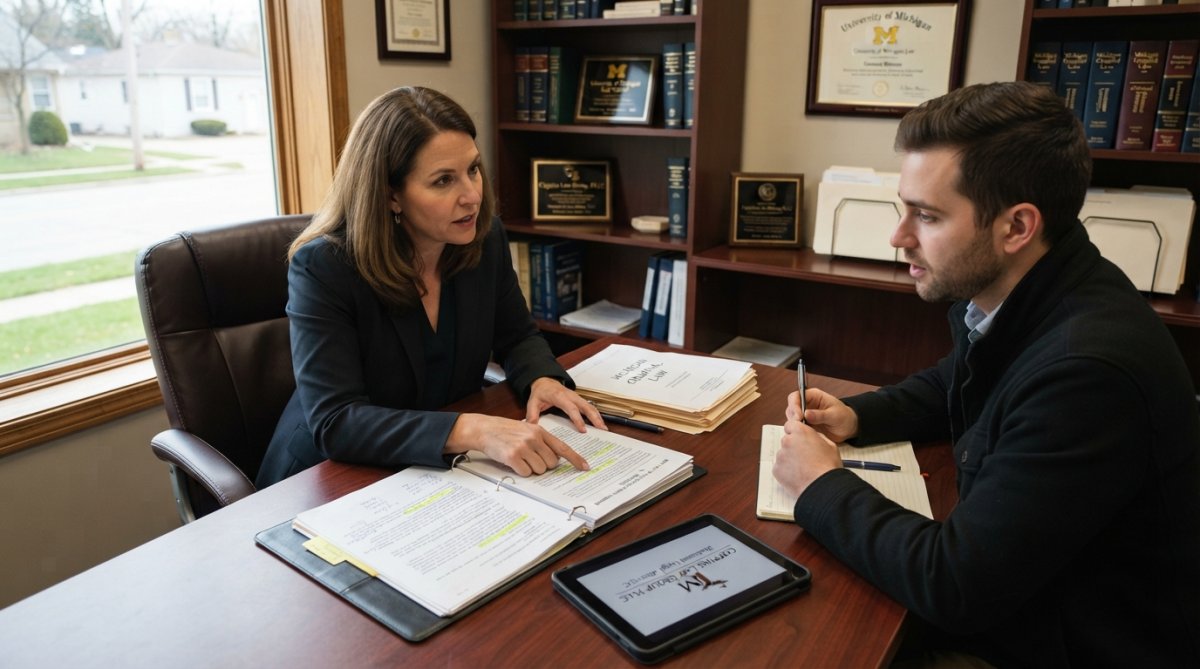
This is not the time to represent yourself or rely on an overwhelmed public defender. A dedicated criminal defense attorney who specializes in misdemeanor defense can mean the difference between conviction and dismissal.
Your attorney's job is to protect your rights from the moment of arrest through final disposition. This includes reviewing the evidence against you, negotiating with prosecutors, identifying diversion eligibility, and representing you in court. An experienced attorney knows the local judges, understands prosecutor tendencies, and can navigate the system in ways that serve your interests.
What a Defense Attorney Can Do for You
A criminal defense attorney investigates your case thoroughly. They review police reports, witness statements, and evidence to identify weaknesses in the prosecution's case. Your attorney negotiates on your behalf. Prosecutors are more likely to offer favorable plea deals to represented defendants than to unrepresented ones.
Most importantly, your attorney ensures your rights are protected. Police sometimes violate constitutional protections during arrest or interrogation. Evidence obtained illegally can be excluded from trial. Your attorney files motions to suppress illegal evidence and ensures proper procedures were followed.
Plea Bargains and Negotiating with Prosecution
A plea bargain is an agreement where you plead guilty to reduced charges or accept a recommended sentence in exchange for the prosecution dropping other charges or recommending leniency. If the evidence against you is strong and conviction is likely, accepting a favorable plea deal may be better than risking a harsher sentence at trial.
Your attorney presents your case to the prosecutor in the best possible light. They highlight your lack of prior record, stable employment, community ties, and rehabilitation potential. Before accepting any plea bargain, understand exactly what you're agreeing to. A guilty plea is permanent and affects your record.
Misdemeanor Expungement and Record Sealing
If you're convicted despite your efforts, expungement and record sealing offer a path to moving forward. Expungement is the complete removal of a conviction from your record. After expungement, you can legally say you were never convicted. Record sealing is similar but slightly less powerful. A sealed record is hidden from the public but can still be accessed by law enforcement, courts, and certain government agencies.
How Expungement Works After Dismissal
If your case is dismissed through diversion or other means, expungement is often automatic or easily obtained. You file a petition with the court requesting expungement, and the judge typically grants it. The timeline varies but usually takes 30-90 days.
If you were convicted, eligibility for expungement depends on the offense and your state's laws. Many states allow misdemeanor convictions to be expunged after a waiting period, typically 3-5 years after completion of your sentence. Once expunged, you can legally answer "no" when asked if you've been convicted of a crime.
Long-Term Employment and Housing Consequences
The employment impact of a criminal record extends far beyond the immediate job search. Professional licenses in healthcare, teaching, counseling, and many other fields can be denied or revoked based on criminal convictions. Housing discrimination is equally serious. Landlords routinely deny applications based on criminal records, and in competitive rental markets, a single conviction can mean dozens of rejected applications.
This is why preventing conviction in the first place, through diversion, charge reduction, or acquittal, is so valuable. Once you avoid conviction, these long-term consequences never materialize.
Alternative Sentencing: Community Service and Conditional Discharge
If conviction is unavoidable, alternative sentencing options can replace or reduce jail time. Community service requires you to work a specified number of hours performing public service, cleaning parks, maintaining public facilities, or working for nonprofits. Sentences typically range from 40 to 200 hours depending on the offense. You complete the hours on a schedule that works with your employment and family obligations.
Community service is preferable to jail because you maintain your job, stay with your family, and contribute to your community. Conditional discharge is a sentence that imposes conditions, probation, counseling, restitution, without jail time. If you complete all conditions without violation, the conviction may be reduced or dismissed. This option is most available to first-time offenders with nonviolent offenses.
State-by-State Variance: Know Your Local Laws
The legal landscape for first-time misdemeanor offenses varies significantly by state. Michigan law differs from California, which differs from New York. Your eligibility for diversion, the penalties you face, and your options for expungement all depend on where you were charged.
Michigan, for example, has specific statutory requirements for diversion programs. Some Michigan counties offer strong pretrial diversion options; others have limited programs. Your attorney should be licensed in your state and familiar with local court procedures, judges, and prosecutor tendencies. Research from the National Institute of Justice shows that diversion program effectiveness varies by jurisdiction.
Financial Costs and Legal Fee Breakdown
Understanding the financial reality of criminal charges helps you plan and make informed decisions.
Court Costs, Fines, and Attorney Fees
Court costs are mandatory fees imposed by the court, separate from any fines or restitution. These typically include filing fees, processing fees, probation supervision fees, and administrative costs. Court costs for a misdemeanor case range from a few hundred dollars to over $1,000 depending on your jurisdiction.
Fines are penalties imposed by the judge as part of sentencing. Misdemeanor fines range from a few hundred to several thousand dollars depending on the offense. Judges have discretion to reduce fines based on financial hardship, and your attorney can advocate for lower fines during sentencing.
Restitution is money paid to victims to compensate them for losses. If you're convicted of theft, you must repay what was stolen. Restitution is mandatory when applicable and is separate from fines.
Attorney fees vary based on whether you hire a private attorney or use a public defender. Public defenders are free if you qualify based on income. Private attorneys charge either flat fees for misdemeanor cases or hourly rates. Many attorneys offer payment plans or reduced fees for first-time offenders.
Facing a first misdemeanor charge is frightening, but you're not powerless. Legal options for first time misdemeanor offenses exist specifically to help people in your situation move forward without a permanent criminal record. The key is acting quickly and getting experienced legal representation immediately.
Coppins Law Group, PLLC specializes in first-time offender cases and understands exactly how to navigate diversion programs, negotiate with prosecutors, and protect your rights throughout the process. Our team has guided hundreds of first-time offenders through successful outcomes, from dismissals to reduced charges to favorable sentencing. We offer a free initial consultation to discuss your specific situation and explore your legal options without obligation. Contact Coppins Law Group, PLLC today to protect your future.
Frequently Asked Questions
What is a diversion program for first-time misdemeanor offenses?
A diversion program, also called pretrial diversion, allows first-time offenders to avoid criminal conviction by completing court-approved rehabilitation, community service, or counseling. Upon successful completion, charges are typically dismissed, and you can pursue expungement to seal the record. This second chance is designed for nonviolent offenses and those showing genuine rehabilitation potential.
Can a first-time misdemeanor be dismissed or expunged?
Yes. Many first-time misdemeanor charges can be dismissed through diversion programs, plea bargains, or successful defense. After dismissal, you can petition for expungement or record sealing, which removes the arrest and conviction from your criminal record. Eligibility depends on the offense type, jurisdiction, and your case specifics. A criminal defense attorney can evaluate whether dismissal is realistic in your situation.
How much will legal representation cost for a first-time misdemeanor?
Legal fees vary significantly based on case complexity, jurisdiction, and whether your case goes to trial or settles via plea bargain. Costs typically include attorney fees, court costs, and fines. Rather than guessing, contact Coppins Law Group, PLLC for a free initial consultation to discuss your specific situation and get transparent information about fees and payment options.
Will a first-time misdemeanor charge ruin my career and housing prospects?
A misdemeanor conviction can impact employment and housing, as background checks often reveal criminal records. However, diversion programs and expungement significantly reduce these long-term consequences by keeping the conviction off your record. Many employers and landlords view first-time offenders more favorably, especially if the offense is nonviolent and you've completed rehabilitation. Early legal intervention is critical to minimize lasting damage.


