 ultimate_guide
Michigan Felony Sentencing Guidelines 2026: A Complete Guide
Table of Contents
- Understanding Michigan Felony Sentencing Guidelines: The Foundation
- Michigan Felony Classes and Penalties Explained
- Offense Variables and Prior Record Variables (PRVs)
- Using a Michigan Sentencing Guidelines Calculator
- Michigan Sentencing Reform 2026: What's Changed
- Habitual Offender Status, Aggravating Factors, and Sentencing Departures
- Individualized Sentencing Factors and Judicial Discretion in 2026
- How to Protect Your Rights: Working With a Criminal Defense Attorney
- Frequently Asked Questions
Last Updated: July 26, 2026
Understanding Michigan felony sentencing guidelines 2026 requires knowledge of how the state's statutory framework determines criminal penalties. At Coppins Law Group, PLLC, we help individuals navigate these intricate guidelines to protect their rights and freedom. Michigan's sentencing system combines statutory minimums, offense variables, prior record variables, and judicial discretion to calculate appropriate penalties for felony convictions. The 2026 legislative reforms expanded judicial discretion and changed how judges apply sentencing calculations, making this understanding critical whether you're facing felony charges or seeking to challenge a sentence.
Understanding Michigan Felony Sentencing Guidelines: The Foundation
Michigan's sentencing guidelines create a presumptive range based on offense severity and the defendant's prior criminal history. Judges must consider offense variables (OVs) and prior record variables (PRVs) to calculate a base sentence, then determine whether to stay within the guideline range or depart based on individualized circumstances.
How the Statutory Sentencing Framework Works
Michigan's sentencing structure begins with the statutory maximum penalty for each felony class, established in the Michigan Criminal Code. These maximums represent the absolute ceiling; no judge can exceed them regardless of circumstances. The sentencing guidelines create a range between the minimum and maximum by scoring offense and prior record variables on a sentencing grid. Judges document their reasons for sentencing on the sentencing form, explaining which factors they considered and how those factors justified the final sentence. Appellate courts review sentencing decisions to ensure judges followed proper procedures and explained any departures from guidelines.
Role of the Michigan Sentencing Commission
The Michigan Sentencing Commission, established under MCL 769.34, oversees the development and maintenance of sentencing guidelines. In 2026, the Commission implemented reforms that expanded judicial discretion for certain offense categories and adjusted offense variable scoring for crimes involving technology and digital evidence. The Commission publishes annual sentencing statistics showing how judges apply guidelines across Michigan's counties, helping identify sentencing disparities and inform decisions about whether guideline adjustments are needed.
Michigan Felony Classes and Penalties Explained
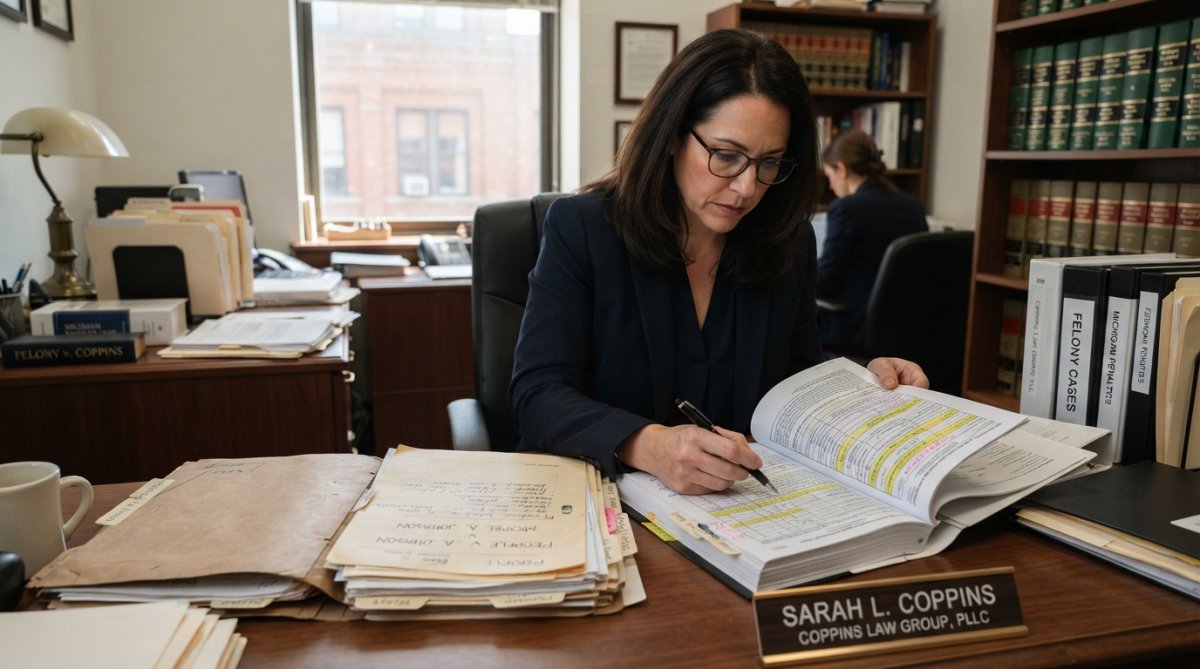
Michigan classifies felonies into eight categories, Classes A through H, with Class A representing the most serious crimes and Class H the least serious felonies. Each class carries statutory maximum penalties that increase in severity as you move from Class H to Class A.
Felony Classification System (Classes A Through H)
Class A felonies include first-degree murder, treason, and armed robbery with a firearm, carrying a statutory maximum of life imprisonment without parole eligibility. Class B felonies include second-degree murder and manslaughter, with maximums of 20-60 years. Class C felonies include sexual assault and home invasion, with maximums of 15-20 years. Class D felonies include assault with intent to commit bodily harm and certain drug trafficking charges, with maximums of 10-15 years. Class E through H felonies carry progressively lower maximums, from 5-10 years down to 2 years or less. The classification determines not only the maximum penalty but also which sentencing guidelines apply.
Mandatory Minimums vs. Guideline Ranges
Mandatory minimums are statutory requirements establishing the lowest sentence a judge can impose for specific crimes. For example, armed robbery carries a mandatory minimum of 2 years imprisonment. A judge cannot sentence below 2 years regardless of mitigating factors, though the sentencing guidelines might calculate a presumptive range of 36-60 months based on offense and prior record variables. In 2026, Michigan maintained most mandatory minimums for serious crimes but added flexibility for judges to depart from mandatory minimums in cases of substantial and compelling reasons. Guideline ranges are calculated presumptively but judges retain discretion to depart.
Offense Variables and Prior Record Variables (PRVs)
The sentencing grid that determines guideline ranges is built on two scoring systems: offense variables (OVs) and prior record variables (PRVs). Understanding how these variables are calculated is essential to predicting potential sentences and identifying scoring errors.
How Offense Variables Impact Your Sentencing Range
Offense variables measure the severity and circumstances of the crime itself, independent of the defendant's criminal history. Michigan uses 20 offense variables (OV 1 through OV 20), each addressing specific aspects of how the crime was committed. OV 1 measures victim injury (death scores 25 points, serious injury scores 15 points, minor injury scores 5 points). OV 2 measures property loss or damage. OV 3 addresses whether the defendant possessed a firearm during the crime. Other offense variables measure the defendant's role in the crime, whether it was premeditated, whether the victim was particularly vulnerable, and whether the defendant's conduct was part of an organized crime operation. Each offense variable generates a point score, which are totaled to create the overall OV score. Scoring errors are common in felony sentencing, and defense attorneys frequently challenge OV calculations on appeal.
Calculating Prior Record Variables for Your Case
Prior record variables measure the defendant's criminal history at the time of sentencing. Michigan uses 6 prior record variables (PRV A through PRV F) to calculate a total PRV score. PRV A counts the number of prior felony convictions, with more serious prior felonies scoring higher. PRV B measures prior misdemeanor convictions. PRV C addresses whether the defendant was on probation, parole, or bond at the time of the current offense. PRV D measures whether the defendant has prior convictions for similar crimes. PRV E addresses prior weapons convictions. PRV F measures prior convictions for crimes against persons. The total PRV score is plotted on the horizontal axis of the sentencing grid. A higher PRV score increases the presumptive sentence range. Challenges to PRV scoring often focus on whether prior convictions should count, as some may be too old, vacated, or expunged.
| Variable Type | Purpose | Impact on Sentence |
|---|---|---|
| Offense Variables (OV 1-20) | Measure crime severity and circumstances | Determines vertical position on grid |
| Prior Record Variables (PRV A-F) | Measure defendant's criminal history | Determines horizontal position on grid |
Using a Michigan Sentencing Guidelines Calculator
A sentencing guidelines calculator allows you to input offense and prior record variable scores and receive the presumptive sentencing range based on Michigan's official guidelines. These calculators are available through the Michigan Judicial Institute and in various legal software platforms.
Step-by-Step Calculation Walkthrough
To use a sentencing calculator, gather the charging document, offense variables, and prior record information. Identify the felony class and specific offense to ensure you're using the correct scoring guidelines. Systematically score each offense variable by reviewing the sentencing manual definitions and applying them to the facts of your case. After scoring all offense variables, total them to create your OV score. Then calculate your PRV score by counting prior convictions and applying the appropriate point values. Once you have your OV and PRV scores, enter them into the sentencing calculator to identify the presumptive sentencing range in months.
Common Mistakes When Using Sentencing Tools
One frequent error involves double-counting victim injury by including it in OV 1 and again in other variables. Another common mistake involves scoring OV 2 incorrectly by including property the defendant did not actually damage or steal. Errors in prior record variable scoring frequently involve counting prior convictions that should be excluded based on age, expungement, or other factors. Misunderstanding the difference between the presumptive range and the mandatory minimum causes confusion.
Michigan Sentencing Reform 2026: What's Changed
The Michigan legislature passed significant sentencing reforms in 2026 that fundamentally altered how judges apply sentencing guidelines. These reforms expanded judicial discretion, adjusted offense variable scoring for certain crimes, and created new mechanisms for sentencing departures.
Legislative Updates and Judicial Discretion Expansion
The 2026 reforms modified MCL 769.34 to give judges explicit authority to depart from guideline ranges based on proportionality considerations and offender-specific factors. Previously, judges could depart from guidelines only if they identified substantial and compelling reasons, which courts interpreted narrowly. Under the 2026 amendments, judges can now depart downward from guideline ranges when they find that the presumptive range is disproportionate to the offense, the offender's history, or other legitimate sentencing factors. The reforms also modified offense variable scoring for crimes involving digital evidence, cybercrime, and technology-facilitated offenses, and created a new sentencing departure category for offenders with significant mental health or substance abuse conditions that contributed to their criminal conduct.
How 2026 Reforms Affect Proportionality and Sentencing Departures
Proportionality is now a central consideration in Michigan sentencing. Judges must consider whether the presumptive guideline range is proportionate to the offense and the offender's background. This gives defense attorneys a powerful argument for downward departures in cases where guideline ranges seem excessive relative to the crime's severity. Sentencing departures are now more common and more likely to be upheld on appeal.
Habitual Offender Status, Aggravating Factors, and Sentencing Departures
Habitual offender status dramatically increases the potential sentence for felony convictions. Understanding when habitual offender enhancements apply and how to challenge them is critical for defendants with prior criminal records.
When Habitual Offender Enhancements Apply
Michigan law allows prosecutors to charge defendants as habitual offenders if they have prior felony convictions. A second habitual offender (two prior felonies) results in a sentence increase of up to 25% above the guideline maximum. A third habitual offender (three or more prior felonies) results in a sentence increase of up to 50% above the guideline maximum. Habitual offender enhancements are filed as separate charges, and the defendant has a right to a hearing on whether the prior convictions qualify for enhancement.
Mitigating Factors and Defense Strategy Integration
Mitigating factors are circumstances that argue for a lower sentence than the guideline range suggests. These include the defendant's age, employment history, family responsibilities, mental health conditions, substance abuse history, and role in the offense. A comprehensive defense strategy integrates mitigating factors into sentencing arguments by presenting evidence through testimony, documents, and professional evaluations. The 2026 reforms explicitly authorize judges to consider offender-specific mitigating factors when departing from guideline ranges.
Individualized Sentencing Factors and Judicial Discretion in 2026
Beyond offense variables and prior record variables, judges consider individualized sentencing factors when determining appropriate sentences. These factors are codified in MCL 769.34 and include considerations like the defendant's character, family circumstances, and potential for rehabilitation.
Factors Judges Consider Beyond the Sentencing Grid
Judges must consider the nature and circumstances of the offense, the defendant's age and prior record, the defendant's character and background, the effect of the offense on the victim, and the need for deterrence and rehabilitation. The defendant's role in the offense is a critical individualized factor. The defendant's mental health status, substance abuse history, and potential for rehabilitation are increasingly important in 2026 sentencing. Judges now routinely consider whether the defendant would benefit from treatment rather than incarceration.
Interactive Sentencing Scenarios and Real-World Examples
Consider a 28-year-old first-time offender convicted of assault with intent to cause serious bodily harm. The guideline range might be 24-36 months, but with stable employment, no substance abuse history, and a recovered victim, a judge might depart downward to 18 months based on proportionality and rehabilitation potential. In another scenario, a 45-year-old repeat offender with three prior felony convictions is convicted of armed robbery. The guideline range is 60-84 months with habitual offender enhancement potentially reaching 126 months. However, if the defendant has maintained employment and has family responsibilities, a judge might impose 72 months, at the lower end of the guideline range.
How to Protect Your Rights: Working With a Criminal Defense Attorney
Protecting your rights in felony sentencing requires strategic representation that addresses guideline calculations, identifies scoring errors, and presents compelling mitigation evidence. An experienced criminal defense attorney can make the difference between a sentence at the high end of guidelines and a substantial downward departure.
Challenging Sentencing Calculations and Advocating for Proportionality
A defense attorney begins by carefully reviewing the sentencing calculation to identify errors in offense variable or prior record variable scoring. Proportionality arguments have become increasingly powerful in 2026. An attorney can argue that even if the guideline range is calculated correctly, the presumptive range is disproportionate to the offense and should be reduced based on the nature of the crime, the defendant's role, and other sentencing factors. Developing mitigation evidence is critical. This involves gathering employment records, educational achievements, family support letters, mental health evaluations, substance abuse treatment records, and any other evidence demonstrating the defendant's positive qualities and potential for rehabilitation. At Coppins Law Group, PLLC, we prepare comprehensive sentencing presentations that integrate guideline analysis with individualized mitigation evidence. We challenge scoring errors, present proportionality arguments, and advocate for sentences that reflect the defendant's circumstances and potential for rehabilitation.
Parole Eligibility and Post-Sentencing Options
Understanding parole eligibility is important for long-term planning. Michigan abolished parole for crimes committed after December 1, 1998, but prisoners convicted of crimes before that date may be eligible for parole consideration. Post-sentencing options include filing motions to correct illegal sentences, requesting sentence modifications if circumstances change significantly, and pursuing appeals if sentencing errors occurred. The 2026 reforms created new grounds for sentence modification based on changed circumstances and proportionality considerations.
Navigating Michigan felony sentencing guidelines 2026 is complex, and the consequences of sentencing errors or inadequate mitigation are severe. Coppins Law Group, PLLC provides comprehensive sentencing defense that challenges guideline calculations, presents compelling mitigation evidence, and advocates aggressively for proportionate sentences. Our team includes experienced criminal defense attorneys who understand the technical aspects of guideline scoring and the persuasive power of individualized sentencing arguments. Contact Coppins Law Group, PLLC today for a free initial consultation to discuss your sentencing situation and explore your legal options.
Frequently Asked Questions
How are Michigan felony sentencing guidelines calculated?
Michigan felony sentencing guidelines use a grid-based system that combines offense variables (OVs) and prior record variables (PRVs). The Michigan Sentencing Commission publishes the sentencing manual with specific point values for different offense characteristics and prior criminal history. Judges locate the intersection of OV and PRV scores on the sentencing grid to determine the recommended range, though judicial discretion allows departures based on individualized sentencing factors and proportionality principles.
What are the different felony classes in Michigan and how do they affect penalties?
Michigan classifies felonies into eight categories (Classes A through H), with Class A being the most serious (life sentences) and Class H the least serious. Each class carries a statutory minimum and maximum sentence. For example, Class B felonies may carry 25-year minimums, while Class H felonies may have shorter ranges. The specific class determines your sentencing grid placement and available judicial discretion, making felony classification critical to understanding your potential penalty.
Can a judge depart from Michigan's sentencing guidelines?
Yes. Michigan judges have judicial discretion to depart from the sentencing guidelines when substantial and compelling reasons exist. Departures can be upward (above the guideline range) based on aggravating factors, or downward based on mitigating factors. The 2026 sentencing reform has expanded this discretion to promote proportionality and individualized sentencing. However, any departure must be justified on the record and may be subject to appellate review if challenged by either party.
What is the Michigan Sentencing Commission and what are its 2026 goals?
The Michigan Sentencing Commission develops the statutory sentencing guidelines used statewide and publishes the sentencing manual. In 2026, the commission has focused on legislative intent reforms aimed at reducing sentencing disparities, enhancing judicial discretion for individualized cases, and promoting proportionality in sentencing outcomes. These reforms reflect evolving standards about fairness and rehabilitation while maintaining public safety considerations in the criminal justice system.
What factors do judges consider when sentencing beyond the guidelines grid?
Beyond offense variables and prior record variables, judges consider individualized sentencing factors including the offender's age, employment history, family circumstances, substance abuse issues, mental health status, remorse, and community ties. Aggravating factors (like use of weapons or victim impact) may increase sentences, while mitigating factors (like cooperation or rehabilitation potential) may decrease them. These factors allow judges to tailor sentences to specific offenders while maintaining proportionality principles.
How do Prior Record Variables (PRVs) impact my sentencing in Michigan?
Prior Record Variables measure your criminal history using a point-based system that considers the number, type, and recency of prior convictions. More serious prior felonies earn higher point values, increasing your PRV score. A higher PRV score moves you up the sentencing grid, resulting in a higher recommended sentencing range. PRVs significantly influence your potential sentence, making accurate calculation essential. Challenging inaccurate prior record information is a critical defense strategy.
What is habitual offender status and how does it affect sentencing?
Habitual offender status (also called habitual criminal designation) applies to repeat offenders with specific prior conviction patterns under MCL 769.12. This status can trigger mandatory minimum sentence enhancements, for example, a second habitual offender conviction may double the minimum sentence. The 2026 sentencing reforms have clarified when these enhancements apply and when judges may have discretion to avoid them based on proportionality and individualized factors. Habitual offender designation significantly increases potential penalties.
[EXTERNAL_LINK: Michigan Judicial Institute Sentencing Guidelines Manual | courts.michigan.gov]
[EXTERNAL_LINK: Michigan Department of Corrections Sentence Calculation Guide | michigan.gov]
[EXTERNAL_LINK: Michigan Sentencing Commission Statistical Reports and Guidelines | courts.michigan.gov]