 ultimate_guide
Michigan License Restoration Steps 2026: Complete Guide
Table of Contents
- Understanding Michigan License Restoration Eligibility
- Step 1: Obtain Your Driving Record and Master Record
- Step 2: Complete Substance Abuse Evaluation and 10-Panel Drug Screen
- Step 3: Michigan Secretary of State License Restoration Forms and Petition
- Step 4: Gather Letters of Support and Character References
- Step 5: Prepare for Your Administrative Hearing
- Step 6: Michigan Ignition Interlock Device Laws and Compliance
- Step 7: Pay Reinstatement Fees and Complete License Restoration
- Frequently Asked Questions
Last Updated: July 24, 2026
Michigan license restoration is a critical legal process for drivers whose licenses have been suspended or revoked. Understanding the steps for michigan license restoration 2026 is essential to regaining your driving privileges. At Coppins Law Group, PLLC, we've guided countless Michigan residents through this complex administrative process. Below, we'll walk you through each stage, from gathering your driving record to completing your administrative hearing.
The license restoration process is governed by strict rules set by the Secretary of State's Office of Hearings and Administrative Oversight. Many people attempt this process alone and make costly mistakes, missing deadlines, submitting incomplete documentation, or failing to meet the clear and convincing evidence standard required by hearing officers.
Understanding Michigan License Restoration Eligibility
Before pursuing michigan license restoration 2026, confirm you meet the eligibility requirements. In Michigan, you become eligible for license restoration after serving a mandatory waiting period: typically one year from suspension for first-time offenses, or five years for second or subsequent violations. If you have multiple DUI or OWI convictions within a seven-year period, additional restrictions may apply.
You must also resolve any underlying legal issues. If you have unpaid fines, outstanding court orders, or pending charges related to your suspension, you won't be eligible until those matters are settled. Contact the Secretary of State's Office directly or work with an attorney to verify your specific eligibility status before investing time in the full restoration process.
Step 1: Obtain Your Driving Record and Master Record
Your driving record is the foundation of your entire restoration case. The Secretary of State maintains two critical documents: your standard driving record and your master record.
To obtain your driving record, visit the Michigan Secretary of State website, a branch office, or submit a request by mail. The online option is fastest, typically processed within 24 hours. Your master record is more comprehensive and includes all violations, suspensions, and administrative actions. Request this record specifically, it doesn't automatically come with your standard driving record. Once received, review both documents carefully for accuracy and store them safely; you'll reference them throughout the restoration process.
Step 2: Complete Substance Abuse Evaluation and 10-Panel Drug Screen
One of the most critical steps for michigan license restoration 2026 is completing a substance abuse evaluation. This evaluation is mandatory for anyone seeking restoration after a DUI or OWI suspension.
Michigan requires that your evaluation be conducted by an approved evaluator. The Secretary of State maintains a list of certified substance abuse evaluators throughout the state. Schedule your evaluation early in the restoration process. The evaluation typically takes 2-4 hours and involves a detailed interview about your drinking or drug use history, family background, and mental health. Be honest and thorough; evaluators can spot inconsistencies.
As part of your substance abuse evaluation, you'll undergo a 10-panel drug screen testing for marijuana, cocaine, amphetamines, opioids, benzodiazepines, barbiturates, phencyclidine (PCP), methadone, propoxyphene, and methaqualone. A negative result demonstrates your commitment to sobriety.
Step 3: Michigan Secretary of State License Restoration Forms and Petition
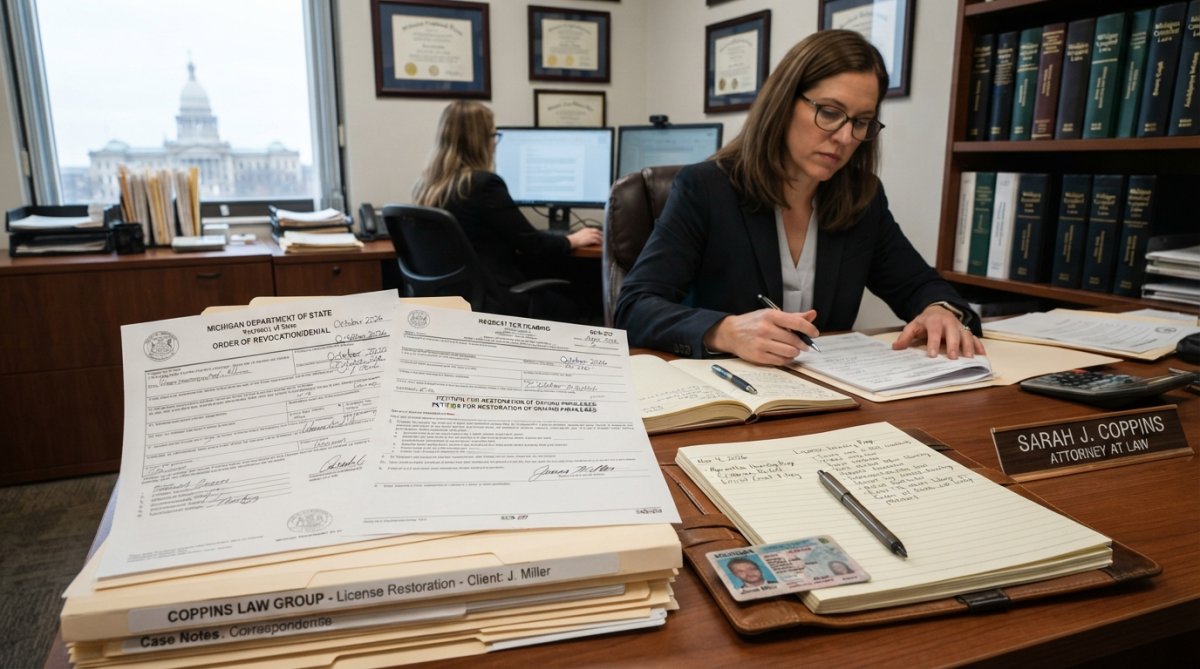
The formal petition for license restoration requires specific Michigan Secretary of State forms. The primary form is the "Petition for Restoration of Driving Privileges" (Form DL 44). Complete every section thoroughly. Don't leave blank spaces or write "N/A" unless the question truly doesn't apply.
You'll also need to submit documentation supporting your petition: your substance abuse evaluation report, proof of any treatment or counseling completed, letters of support from employers or family members, and documentation of your employment and living situation. Organize all documents in the order specified by the Secretary of State. The petition filing fee typically costs between $100-$200. Submit your completed petition and supporting documents to the Office of Hearings and Administrative Oversight by mail, in person, or electronically. Keep a copy of everything you submit.
Step 4: Gather Letters of Support and Character References
Letters of support are powerful evidence in your license restoration case. These letters demonstrate that people who know you well believe you've changed and deserve another chance.
Choose your letter writers carefully. The strongest letters come from people with direct knowledge of your situation: employers, family members, close friends, counselors, clergy members, or community leaders. Ask each letter writer to address specific points: How long have they known you? What changes have they observed since your suspension? Do they believe you're committed to sobriety? Would they trust you to drive?
Request that letters be typed on official letterhead if possible and signed by the writer. Aim to gather at least three to five strong letters.
Step 5: Prepare for Your Administrative Hearing
Your administrative hearing before a hearing officer from the Office of Hearings and Administrative Oversight is the critical moment in your license restoration case.
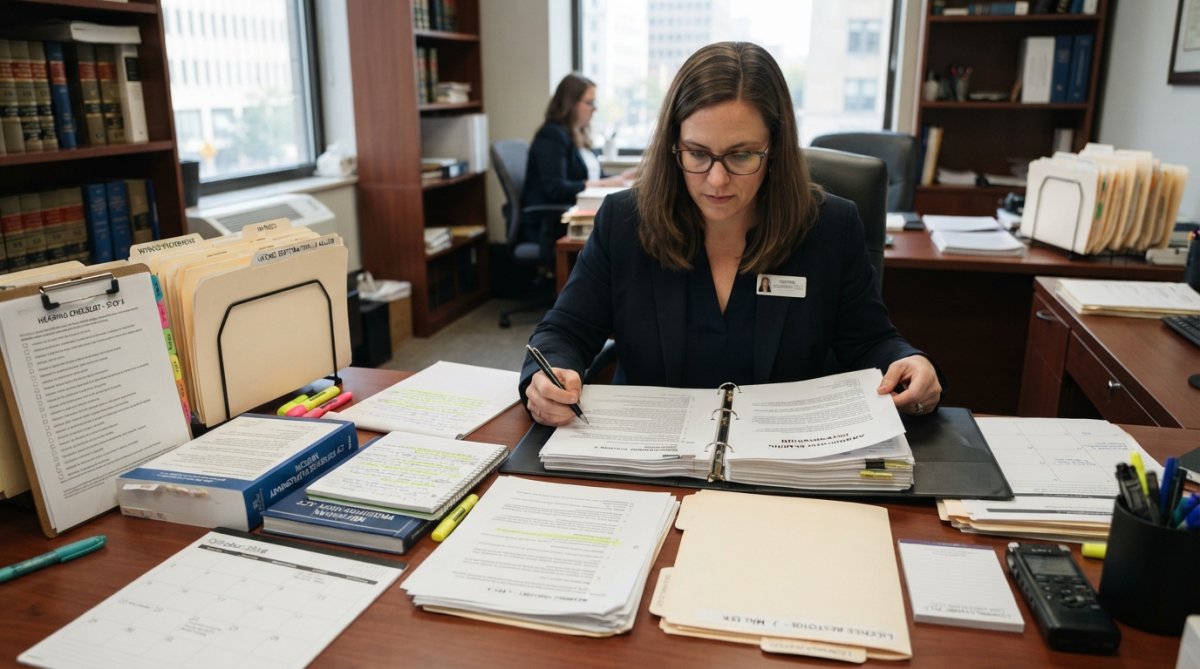
Preparation is essential. Review your substance abuse evaluation report multiple times. Understand what your evaluator concluded about your substance use disorder, your prognosis, and your risk of relapse. Prepare a brief personal statement explaining your situation: Why did you use alcohol or drugs? What led to your DUI or OWI? What have you learned? How have you changed? Practice answering these questions aloud.
Gather all your supporting documentation and organize it logically. Bring originals and copies of your driving record, substance abuse evaluation, treatment records, employment verification, and letters of support.
Understanding the Clear and Convincing Evidence Standard
Michigan law requires that you prove your case by "clear and convincing evidence." This is a higher standard than "preponderance of the evidence" but lower than "beyond a reasonable doubt." Clear and convincing evidence means the evidence must be substantially more persuasive than the opposing evidence and must produce in the mind of the hearing officer a firm belief as to the truth of the allegations.
You need solid, credible evidence demonstrating genuine change. Your substance abuse evaluation is critical because it's conducted by a professional trained to assess substance use disorders. Letters of support show that others see your commitment to change. Your employment record demonstrates stability and responsibility. The hearing officer will also consider any evidence suggesting you haven't changed, such as prior violations or failed treatment attempts. Honesty throughout the process is crucial.
Working with the Office of Hearings and Administrative Oversight
When you file your petition, the Office of Hearings and Administrative Oversight assigns a hearing officer to your case. Your hearing will typically occur 30-60 days after you file your petition. You have the right to be represented by an attorney at your hearing. While not required, having legal representation significantly improves your chances of success. An experienced license restoration attorney knows what evidence the hearing officer wants to see and how to present your case effectively. Coppins Law Group, PLLC has extensive experience with administrative hearings and understands exactly what Michigan hearing officers are looking for.
The hearing itself is relatively informal. The hearing officer will review your petition and supporting documents, then ask you questions about your substance use history, your commitment to sobriety, and your understanding of the seriousness of driving under the influence. The hearing typically lasts 30-60 minutes.
Step 6: Michigan Ignition Interlock Device Laws and Compliance
If your license is restored, Michigan law may require you to install an ignition interlock device (IID) in your vehicle. Understanding these requirements before your hearing ensures you're prepared to comply immediately upon restoration.
An ignition interlock device is a breath-testing device installed in your vehicle's ignition system. Before the engine will start, the driver must provide a breath sample. If the device detects alcohol above a preset limit (typically 0.02 percent), the engine won't start. The device also requires periodic rolling retests while driving.
Michigan requires an IID for drivers convicted of certain DUI and OWI offenses. For a first offense, you may be required to use an IID for six months to one year. For subsequent offenses, the requirement extends longer, sometimes two years or more. The cost of IID installation and monthly monitoring typically ranges from $60-$150 per month. You're responsible for maintaining the device in proper working condition, scheduling regular calibration appointments (typically monthly), and reporting any malfunctions immediately. Failure to maintain the device or tampering with it can result in license re-suspension.
Step 7: Pay Reinstatement Fees and Complete License Restoration
Once your petition is approved by the hearing officer, you must complete final administrative steps and pay reinstatement fees before your license is actually restored.
The Secretary of State charges a license reinstatement fee, typically ranging from $125-$300. This is separate from any court fines or restitution associated with your original DUI or OWI conviction. You'll receive a reinstatement notice specifying the exact fees owed and payment instructions. Payment can be made by mail, in person at a Secretary of State office, or online. After payment is received and processed, the Secretary of State will issue your restored license. Upon restoration, you must comply with all conditions imposed by the hearing officer. Any violation of restoration conditions can result in immediate re-suspension.
| Step | Timeline | Key Requirement |
|---|---|---|
| Obtain driving records | 1-2 weeks | Request master record and standard driving record from SOS |
| Complete substance abuse evaluation | 2-4 weeks | Must use approved evaluator; include 10-panel drug screen |
| File petition and supporting documents | 1-2 weeks | Complete all SOS forms; gather letters and documentation |
| Await hearing assignment | 2-4 weeks | Hearing typically scheduled 30-60 days after filing |
| Prepare for administrative hearing | 2-4 weeks | Review evaluation; practice testimony; organize evidence |
| Attend hearing | 1 day | Present evidence; answer questions; demonstrate clear and convincing evidence |
| Receive hearing decision | 1-2 weeks | Decision mailed to you; if approved, proceed to payment |
| Pay reinstatement fees | 1 week | Pay $125-$300 fee; submit payment by deadline |
| Receive restored license | 1-2 weeks | New license issued; comply with all conditions |
Navigating Michigan license restoration requires patience, thorough preparation, and attention to detail. The steps for michigan license restoration 2026 are clearly defined, but the process demands commitment and honest self-reflection. Many people attempt this process alone and face unnecessary delays or denials due to incomplete documentation or poor hearing preparation. Coppins Law Group, PLLC specializes in administrative hearings and license restoration cases throughout Michigan. Our experienced team understands the clear and convincing evidence standard, knows what hearing officers are looking for, and can guide you through every stage of the process. Contact Coppins Law Group, PLLC today for a free initial consultation to discuss your specific situation and explore how we can support your restoration case.
Frequently Asked Questions
What are the eligibility requirements for Michigan license restoration in 2026?
To pursue license restoration in Michigan, you must have served your license suspension period and demonstrate that you can safely return to driving. The Secretary of State requires proof of sobriety, completion of substance abuse evaluation, a 10-panel drug screen, and evidence of changed behavior through letters of support and treatment history. You must also meet the clear and convincing evidence standard set by the Office of Hearings and Administrative Oversight to show you are no longer a threat to public safety.
How long does the Michigan license restoration process take in 2026?
The timeline varies depending on your specific case and hearing availability. After submitting your petition to the Secretary of State, you typically wait 30-60 days for a hearing date. The administrative hearing itself may take 1-2 hours. After the hearing, the hearing officer may issue a decision within 2-4 weeks. If approved, you can complete reinstatement and receive your license within days. If denied, you may appeal, which adds additional time.
What documents do I need for my Michigan license restoration hearing?
Essential documents include your driving record from the Secretary of State, substance abuse evaluation results, 10-panel drug screen results, letters of support from family and employers, proof of AA/NA attendance and relapse prevention plan completion, treatment history records, and your petition for restoration. You may also need proof of employment, housing stability, and any volunteer attorney or legal counsel representation documents. Organize all evidence clearly to demonstrate the clear and convincing evidence standard required by the hearing officer.
Do I need an attorney for Michigan license restoration?
While not legally required, working with an experienced attorney significantly improves your chances of success. Attorneys understand the clear and convincing evidence standard, know how to present your case effectively before the hearing officer, and can help you gather the strongest possible documentation. Many Michigan law firms, including those specializing in administrative hearings, offer free initial consultations. Your attorney can also guide you through Michigan Vehicle Code requirements and post-restoration compliance obligations.
What happens if my Michigan license restoration petition is denied?
If denied, you have the right to appeal the hearing officer's decision. You can request reconsideration or file an appeal with the Office of Hearings and Administrative Oversight. The appeal process allows you to submit additional evidence, address weaknesses in your original case, and demonstrate further progress in your sobriety journey. Many people successfully restore their licenses on a second or third attempt after addressing the specific concerns raised by the hearing officer in their denial.
What is a Michigan hardship license and how does it differ from full restoration?
A hardship (or restricted) license allows limited driving for essential purposes like work, medical treatment, or education while your suspension remains in effect. It is not the same as full license restoration. To obtain a restricted license, you petition the Secretary of State separately from a restoration petition. A restricted license may be available earlier in your suspension period, but full restoration requires meeting all requirements including substance abuse evaluation, 10-panel drug screen, and the clear and convincing evidence standard.
What is an ignition interlock device and when is it required in Michigan?
An ignition interlock device (BAIID) is a breathalyzer installed in your vehicle that prevents the engine from starting if alcohol is detected. Michigan law may require installation for certain DUI offenses or as a condition of license restoration, particularly for repeat drunk driving convictions. The device monitors your compliance and reports results to the Secretary of State. Costs and duration requirements vary based on your case specifics. Your hearing officer or attorney can clarify whether a BAIID is mandatory for your restoration.