 how-to guide
Challenge DUI Breath Test Results: A Legal Guide
Table of Contents
- Understanding Breathalyzer Technology and How It Can Fail
- False Breathalyzer Readings: Medical and Environmental Causes
- Reviewing Breathalyzer Calibration Records and Device Maintenance
- Step-by-Step: How to Challenge DUI Breath Test Results in Court
- Mouth Alcohol Defense: Why the 15-Minute Rule Matters
- Hiring a DUI Lawyer to Challenge Breath Test Evidence
- Common Mistakes to Avoid When Challenging Breath Test Results
- Your Next Steps: Administrative Hearing and DMV Defense
- Frequently Asked Questions
Challenge DUI Breath Test Results: A Legal Guide
Last Updated: July 25, 2026
When you're facing a DUI charge, the breath test result often feels like the final word. But it doesn't have to be. At Coppins Law Group, PLLC, we've helped countless clients understand how to challenge DUI breath test results in ways that can significantly impact their case. Breathalyzers are machines that can malfunction, be improperly calibrated, or be administered incorrectly. Understanding the science behind these devices and the procedural requirements surrounding their use is your first line of defense.
This guide covers the practical steps you can take to challenge breath test evidence in court, from requesting calibration records to identifying medical conditions that skew results.
Understanding Breathalyzer Technology and How It Can Fail
Breathalyzers measure the alcohol content in your breath and estimate your blood alcohol concentration (BAC). Most law enforcement agencies use fuel cell technology, which oxidizes ethanol in your breath sample and measures the electrical current produced. The problem is that this conversion relies on assumptions that aren't always accurate. The machine assumes a 1:2100 ratio between breath alcohol and blood alcohol, but this ratio varies significantly between individuals based on metabolism, temperature, and other physiological factors.
Fuel Cell Technology Basics
Fuel cell breathalyzers contain a chemical reaction chamber where ethanol oxidizes in the presence of sulfuric acid and potassium dichromate, producing an electrical current proportional to the amount of ethanol present. The critical weakness is that fuel cell technology doesn't distinguish between ethanol and other substances that oxidize similarly. Acetone, commonly produced during ketosis or in diabetic patients, can trigger false readings. Methanol, formaldehyde, and other compounds can also cause the device to overestimate BAC. Accuracy depends entirely on proper maintenance and calibration, factors frequently overlooked by law enforcement agencies.
Common Sources of False Positives
Mouth alcohol is one of the most common culprits. If you consumed alcohol, used mouthwash, or burped shortly before the test, residual alcohol in your mouth can inflate your BAC reading artificially. This is why the 15-20 minute observation period exists, though it's frequently mishandled by officers.
Environmental factors also play a role. Some breathalyzers are sensitive enough to register readings from ambient air contamination in police stations where multiple tests are conducted daily. Temperature fluctuations affect the chemical reactions inside the device, and improper storage can degrade the reagent solutions.
Medical conditions create another avenue for false positives. Gastroesophageal reflux disease (GERD), acid reflux, and burping can introduce stomach contents into the mouth, where alcohol vapor can be detected. Diabetes and ketosis produce acetone, which fuel cell breathalyzers struggle to distinguish from ethanol.
False Breathalyzer Readings: Medical and Environmental Causes
Your body's chemistry can significantly impact a breath test result, often in ways that have nothing to do with how much alcohol you actually consumed.
Medical Conditions That Affect Results
Type 1 diabetes and uncontrolled Type 2 diabetes cause the body to produce ketones, particularly acetone, which is exhaled through the lungs and can register as a false positive on a fuel cell breathalyzer. GERD and acid reflux bring stomach contents into the esophagus and mouth, where alcohol vapor can accumulate if you've consumed any alcohol at all. Hypoglycemia (low blood sugar) can also trigger the production of ketones, creating the same false positive issue. These conditions create reasonable doubt about the accuracy of the test result, which is exactly what you need in court.
Mouth Alcohol and the Observation Period
The 15-20 minute observation period exists to allow mouth alcohol to dissipate before the test is administered. When you consume alcohol, some of it remains in your mouth, throat, and esophagus. A breathalyzer measures this mouth alcohol along with deep lung alcohol, artificially inflating your BAC reading.
An officer conducting a proper observation period should watch you for 15-20 minutes without eating, drinking, smoking, or burping. Many officers skip this step entirely, rush through it, or fail to document it properly. If the observation period was shortened, skipped, or not recorded in the police report, you have grounds to challenge the test result.
Mouthwash contains 15-27% alcohol by volume. Breath mints, cough syrup, and even some foods can introduce alcohol into your mouth. An officer should ask about these before administering the test. If they didn't, or if the police report doesn't document this questioning, it's a procedural error that weakens the prosecution's case.
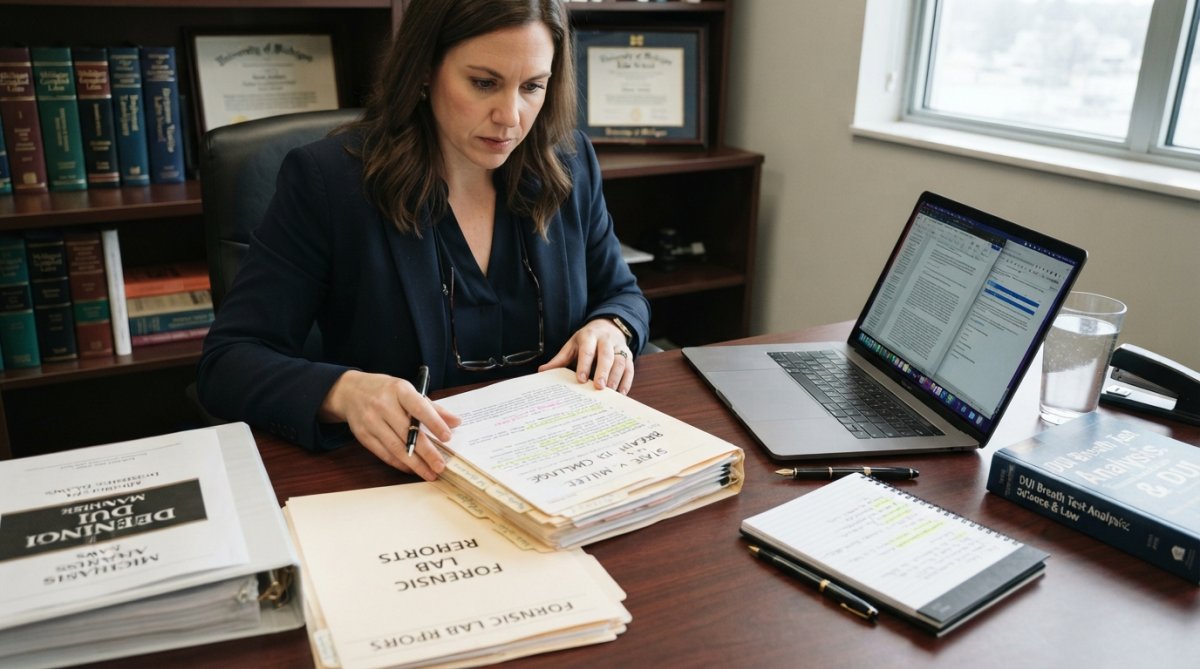
Reviewing Breathalyzer Calibration Records and Device Maintenance
One of the most effective ways to challenge breath test results is to examine the device's maintenance and calibration history. Breathalyzers must be calibrated regularly, typically every 30-60 days depending on jurisdiction, and maintained according to strict manufacturer specifications.
What Calibration Logs Should Show
Calibration records should document the date of calibration, the technician who performed it, the specific calibration solution used, and the results of the calibration test. The device should be within an acceptable margin of error, usually ±10% of the known calibration solution's value. If the calibration log shows the device was out of acceptable range, that's grounds to challenge the reliability of any test conducted with that device. Request the complete calibration records for the specific device used in your case.
Red Flags in Maintenance Records
If the device wasn't calibrated within the required timeframe, that's a major red flag. If maintenance logs are missing or incomplete, it suggests the police department wasn't following proper protocols. Look for evidence of improper storage, exposure to extreme temperatures, or physical damage to the device. Check whether the technician who performed calibration was properly certified and whether they used the correct calibration solution for that specific device model.
Step-by-Step: How to Challenge DUI Breath Test Results in Court
Building a successful challenge to breath test evidence requires a systematic approach.
Step 1: Request Discovery and Police Reports
Your first action should be to request all discovery materials from the prosecution. This includes the police report, the breath test result printout, calibration records, maintenance logs, officer training certifications, and any video or audio recordings of the arrest and testing procedure. Pay close attention to whether the police report mentions the observation period at all. If it doesn't, that's a significant gap.
Step 2: Examine the 15-20 Minute Observation Period
Review the police report and any video evidence to determine whether a proper observation period occurred. The officer should have watched you continuously for 15-20 minutes without allowing you to eat, drink, smoke, or burp. If the observation period was shorter than 15 minutes or isn't documented, you have strong grounds to challenge the test.
Step 3: Verify Officer Training and Certification
Breath test administration requires specific training and certification. Officers must complete manufacturer-approved training on the specific device model used in your case. Request documentation of the officer's training and certification. If the officer wasn't properly trained on the specific device or if their certification had expired at the time of your test, that's a procedural violation.
Step 4: File a Suppression Motion
A suppression motion asks the court to exclude the breath test evidence from trial based on procedural violations or constitutional violations. Common grounds include improper observation period, failure to calibrate the device within required timeframes, officer not properly trained or certified, violation of your constitutional rights during the traffic stop or arrest, improper administration of the test, and device malfunction or maintenance issues.
Mouth Alcohol Defense: Why the 15-Minute Rule Matters
The observation period is one of the most frequently mishandled aspects of breath testing and one of the easiest to challenge. Mouth alcohol can inflate your BAC reading by as much as 0.05 or more, depending on how much alcohol is present in your mouth at the time of the test. This is the difference between a reading of 0.08 (the legal limit) and 0.13 (a significantly higher charge).
The 15-20 minute observation period allows mouth alcohol to naturally dissipate. During this time, saliva production washes away residual alcohol, and the alcohol remaining in your mouth evaporates. Common violations include the officer leaving the room during the observation period, allowing you to smoke or chew gum, or failing to document what happened during the observation period. If the police report doesn't explicitly document the observation period, that absence itself is evidence of a procedural violation.
Hiring a DUI Lawyer to Challenge Breath Test Evidence
Challenging breath test results requires expertise in both the science of breathalyzers and the procedural law governing their use.
What Expert Witnesses Can Prove
Expert witnesses in breath test cases typically have backgrounds in toxicology, chemistry, or forensic science. They can testify about how breathalyzers work, the limitations of fuel cell technology, and the conditions under which false positives occur. They can explain why the 1:2100 breath-to-blood ratio assumption is flawed and what calibration and maintenance errors mean for test reliability. An expert witness can review the specific device's maintenance and calibration records and testify about whether proper procedures were followed. The prosecution will likely present their own expert witness to defend the breath test result. Your expert witness is essential to cross-examining that testimony and presenting the jury with a credible alternative explanation for the reading.
Post-Arrest Timeline and Critical Deadlines
DUI cases operate on strict timelines, and missing a deadline can seriously harm your defense. In most jurisdictions, you have a limited time to request a DMV or administrative hearing to challenge the suspension of your driver's license. This deadline is often 10 days from your arrest. You also have limited time to request discovery materials from the prosecution. Your attorney should file a discovery request immediately after being retained, specifying exactly what materials are needed: calibration records, maintenance logs, officer training certifications, video evidence, and the breath test result printout.
Common Mistakes to Avoid When Challenging Breath Test Results
The biggest mistake is waiting too long to hire an attorney. The sooner your attorney can request discovery materials and begin investigating, the better. Memories fade, evidence can be lost, and procedural deadlines pass quickly.
Don't discuss the details of your case with anyone except your attorney. Don't assume the breath test result is accurate just because it came from a machine. Machines malfunction, are improperly maintained, and are misused. Don't ignore the administrative license suspension process. Even if you're ultimately acquitted of DUI, losing your license during the case can severely impact your life. Don't accept a plea deal without fully understanding the consequences. A DUI conviction carries serious penalties, license suspension, fines, potential jail time, and a permanent criminal record.
Your Next Steps: Administrative Hearing and DMV Defense
The DUI process involves two separate proceedings: the criminal case and the administrative license suspension case. Both are important, and both require strategic action.
The administrative hearing, also called a DMV hearing or administrative per se hearing, is a separate proceeding from your criminal case. In this hearing, the DMV or administrative agency determines whether your driver's license should be suspended based on the DUI arrest. At the administrative hearing, you can challenge the breath test result, question whether there was reasonable suspicion for the traffic stop, and challenge whether the officer had probable cause to arrest you. An experienced DUI attorney can effectively challenge the breath test evidence and the circumstances of your arrest at this hearing.
The administrative hearing must be requested within a specific timeframe, often 10 days from your arrest. Missing this deadline can result in automatic license suspension. Your attorney will ensure this deadline is met and will prepare thoroughly for the hearing.
Facing a DUI charge based on a breath test result doesn't mean you're out of options. Breathalyzers are machines, fallible, subject to calibration errors, and capable of producing false positives for legitimate medical and environmental reasons. The procedures surrounding their use are equally important, and procedural violations can render even a technically accurate test inadmissible in court. Coppins Law Group, PLLC brings deep expertise in challenging breath test evidence, from reviewing calibration records and maintenance logs to cross-examining officers about training and certification. We've successfully challenged breath test results by identifying procedural errors, exposing device reliability issues, and presenting expert testimony about medical conditions affecting test accuracy. If you're facing DUI charges and want to understand how to challenge DUI breath test results in your specific case, contact Coppins Law Group, PLLC today for a free initial consultation to discuss your defense strategy.
| Challenge Strategy | Key Evidence | Potential Impact |
|---|---|---|
| Observation period violation | Police report gaps, video evidence | Test result excluded |
| Device calibration failure | Maintenance logs, calibration records | Test reliability questioned |
| Officer training deficiency | Training certifications, expiration dates | Officer credibility undermined |
| Medical condition interference | Medical records, expert testimony | False positive explanation provided |
| Improper administration | Police report details, officer testimony | Procedural violation established |
Frequently Asked Questions
What are the most common causes of false breathalyzer readings?
False breathalyzer readings can result from several factors. Medical conditions like GERD, diabetes, and ketosis can elevate breath alcohol readings. Mouth alcohol from mouthwash, breath mints, or residual alcohol in the mouth within 15 minutes of the test can skew results. Device calibration errors, improper maintenance, and operator error during test administration also contribute to inaccurate readings. Environmental factors and the individual's metabolism can further affect accuracy, making it essential to examine the specific circumstances of your test.
How can a DUI lawyer challenge breath test results in court?
A DUI lawyer can challenge breath test results through multiple strategies. Request discovery to obtain calibration logs and device maintenance records, missing or irregular calibration may render the test inadmissible. Examine whether the officer conducted the mandatory 15-20 minute observation period and verify the officer's training and certification. File a suppression motion to exclude the test if procedural errors occurred. Hire an expert witness to testify about fuel cell technology limitations, retrograde extrapolation issues, or medical conditions affecting BAC. Challenge the legality of the initial traffic stop if reasonable suspicion was absent.
Why is the 15-minute observation period critical in a breath test challenge?
The 15-20 minute observation period is legally mandated to prevent mouth alcohol from contaminating the breath sample. If you consumed alcohol, ate food, or used mouthwash immediately before the test, residual alcohol in your mouth, not your blood, can produce a falsely elevated reading. Law enforcement must observe you continuously during this window to ensure you don't introduce substances that artificially inflate your BAC. If the officer failed to conduct this observation or documented it improperly, the entire test result may be challengeable and potentially suppressed as evidence.
What deadlines should I know about after a DUI arrest?
Critical deadlines vary by jurisdiction but typically include requesting a DMV or administrative hearing within 10 days of arrest to challenge license suspension. You must file motions to suppress evidence before trial. Police reports and breath test records must be disclosed during discovery. Consult an attorney immediately, delays in requesting hearings or filing motions can result in lost rights. Your criminal case and administrative license hearing operate on separate timelines, so tracking both is essential. Missing even one deadline can significantly weaken your defense and limit your options.