 how-to
Michigan Misdemeanor Probation Drug Testing Rules
Table of Contents
- How Probation Drug Testing Works in Michigan Misdemeanor Cases
- Who Determines Your Drug Testing Terms and Requirements
- Michigan Probation Drug Testing Frequency and Random Screens
- Drug Testing Procedures: Specimen Collection and Chain of Custody
- What Happens When You Fail a Drug Test on Probation in Michigan
- Missed Drug Tests on Probation: Rules and Consequences
- Prescription Medications and False Positive Results on Drug Tests
- Challenging Test Results and Your Right to Confirmatory Testing
- Frequently Asked Questions
Last Updated: October 17, 2026
How Probation Drug Testing Works in Michigan Misdemeanor Cases
When a Michigan court orders probation drug testing rules as part of a misdemeanor sentence, you're entering a system governed by your specific probation order. This isn't a one-size-fits-all process. Your probation officer and the court determine what testing looks like for your case.
At Coppins Law Group, PLLC, we help clients understand exactly what probation drug testing rules mean in practice.
Here's what matters: probation drug testing in Michigan misdemeanor cases operates under the authority of the probation order itself. That order is your legal roadmap. It spells out whether you'll be tested, how often, what substances are screened, and what happens if you fail.
Most people don't realize that probation drug testing rules vary dramatically from case to case. One defendant might face random monthly screens. Another might need weekly testing. The difference comes down to the judge's assessment of risk and the probation officer's recommendation.
Who Determines Your Drug Testing Terms and Requirements
The judge decides the core framework. During sentencing, the court imposes conditions of probation. These conditions are written into your probation order. The judge may order drug testing as a condition, but the judge doesn't typically specify every detail about frequency or testing methods.
Your probation officer fills in the operational details. Once you're assigned a probation officer, they administer the probation drug testing rules on the ground. They decide when you'll be tested, which testing facility you'll use, and how results are reported back to the court.
This matters because probation officers have discretion. Within the bounds of your probation order, they can adjust testing frequency based on your compliance history. If you pass every test for six months, some officers may reduce testing frequency.
The Department of Corrections also sets statewide standards for how testing is conducted. These standards cover specimen integrity, chain of custody procedures, and which substances are screened. But your individual probation order is what binds you legally.
Michigan statute MCL 771.3 governs probation conditions generally. The statute allows courts to impose conditions they deem necessary. Drug testing falls squarely within that authority.
Michigan Department of Corrections probation oversight
Michigan Probation Drug Testing Frequency and Random Screens
Frequency depends entirely on what your probation order says. Some orders specify "random drug screens." Others say "monthly testing." Some say "as directed by probation officer."
Random testing means you don't know when it's coming. The probation officer can call you in on short notice. This unpredictability is intentional, it deters use because you can't time it.
Monthly testing is more predictable. You might be tested on the same date each month, or within a certain window. Predictable testing still deters use, but it gives you structure.
"As directed by probation officer" is the broadest language. It means your officer can change frequency based on circumstances:
- You're complying consistently: testing might decrease to monthly
- You missed a test: testing might jump to weekly
- You failed a test: testing could become twice weekly until you demonstrate compliance
Most misdemeanor probation orders don't specify exact frequency. Instead, they give the probation officer authority to set it. This is standard practice across Michigan.
Missed tests trigger immediate consequences. If you're ordered to test and don't show up, that's a probation violation. It doesn't matter whether you have a good reason. The probation officer will report it to the court. You may face sanctions, increased testing, or probation revocation.
Drug Testing Procedures: Specimen Collection and Chain of Custody
The testing process follows strict protocols to ensure results are legally valid. Understanding these procedures matters because they protect your rights.
Specimen collection happens at a designated facility. The collector verifies your identity using government-issued ID. You'll be asked to provide a urine sample in a private bathroom or collection room.
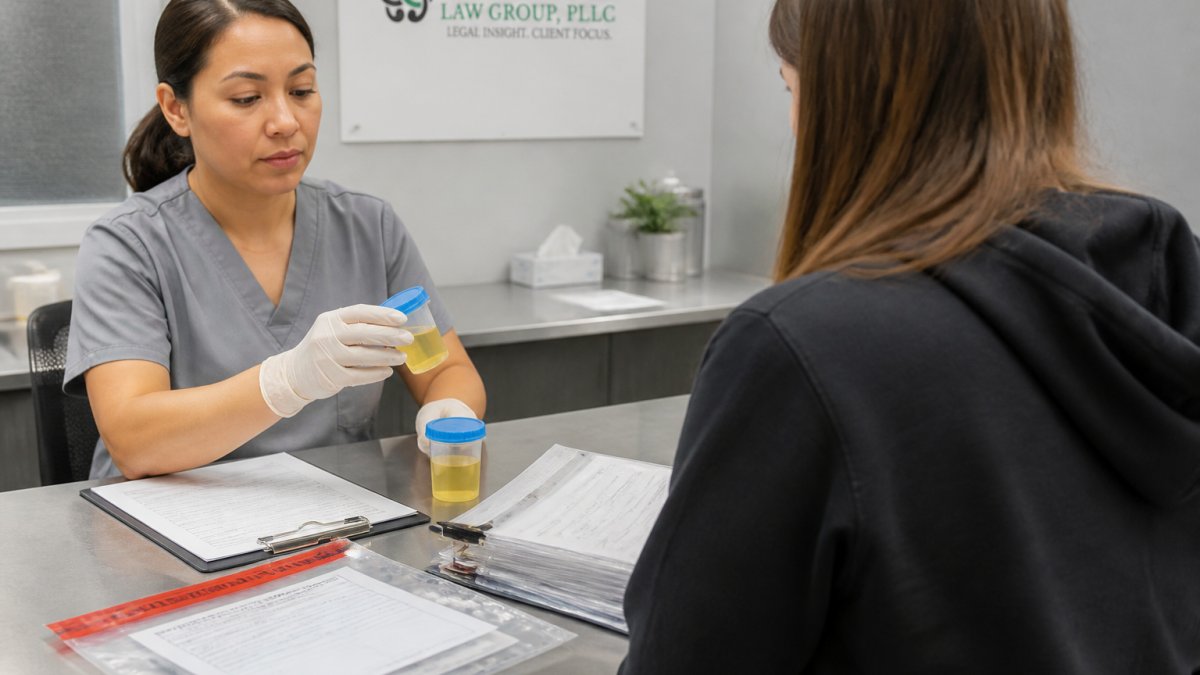
After collection, the specimen is sealed and labeled. The label includes your name, date, time, and collector's initials.
Chain of custody is critical. Every person who touches the specimen must sign a form documenting the transfer. The specimen moves from collector to lab.
This chain of custody protects you. If the chain is broken, if there's a gap in documentation or an unexplained transfer, the results may be challenged in court.
The specimen is typically divided into two portions. One is tested immediately. The other is retained for confirmatory testing if needed.
Most facilities use urine testing for probation drug screening. Urine tests screen for common substances:
- Marijuana
- Cocaine
- Methamphetamine
- Opioids
- Benzodiazepines
- Amphetamines
- Barbiturates
- PCP
Some probation orders specify a particular panel, 6-panel, 12-panel, or expanded screening. Your probation officer will tell you which panel applies to your case.
What Happens When You Fail a Drug Test on Probation in Michigan
A positive result triggers a probation violation process. The probation officer reports the failed drug test on probation to the court. You'll be notified and typically asked to appear before the judge.
At a violation hearing, the prosecution (usually the probation department) presents the positive result. You have the right to respond. You can contest the result, explain the positive, or argue for leniency.
A failed drug test on probation Michigan doesn't automatically mean probation ends. The judge has options:
Get Your Free Consultation Now →
- Increase testing frequency
- Impose additional conditions (counseling, treatment)
- Extend probation
- Impose jail time
- Revoke probation entirely
The judge considers your history. First-time positive? You might get a warning and increased testing. Multiple positives? You're more likely to face jail or revocation.
Missed Drug Tests on Probation: Rules and Consequences
Missing a scheduled test is a probation violation. You must appear at your scheduled testing time. If you can't make it, contact your probation officer before the appointment.
A legitimate reason, medical emergency, work conflict you reported in advance, might protect you from a violation. But you need to document it. Get written confirmation from your probation officer that you reported the conflict and it was approved.
If you miss a test without approval, the probation officer will file a violation report. You'll be ordered to appear in court. The judge will ask why you missed it.
Consequences for a missed drug test on probation Michigan include:
- Increased testing frequency (weekly instead of monthly)
- Jail time (typically 10-30 days for a first missed test)
- Probation extension
- Probation revocation with sentencing to prison
Multiple missed tests escalate consequences. A pattern of missed tests suggests you're not complying with probation. Judges view this seriously.
Some probation officers will issue a warning for a first missed test if you have a reasonable explanation. But don't count on it. Treat every scheduled test as mandatory.
Prescription Medications and False Positive Results on Drug Tests
Certain prescription medications can trigger a positive result on a standard drug screen. Common culprits include:
- Opioid painkillers (hydrocodone, oxycodone)
- Benzodiazepines (Xanax, Valium)
- Stimulants (Adderall, Ritalin)
- Some antihistamines
- Certain over-the-counter cold medicines
If you're taking a prescription medication, inform your probation officer before testing. Bring the prescription bottle or a letter from your doctor. Document what you're taking, the dosage, and why.
When you test positive, the lab can sometimes distinguish between a prescribed medication and illicit use. But this depends on the testing method and the substance. Some tests can identify the specific source. Others cannot.
A positive result for a prescription you're legitimately taking is not a violation. You have a legal defense. But you must prove the prescription is valid and current.
Some medications can cause false positives for substances you're not taking. For example, certain antidepressants might register as amphetamines on a basic screen. Confirmatory testing can clarify this, but you need to know it's possible.
If you get a positive result and you believe it's a false positive from medication, request a confirmatory test immediately. This is your right. The confirmatory test uses more specific methods and can identify the actual substance.
Challenging Test Results and Your Right to Confirmatory Testing
You have the right to challenge a positive result. The first step is requesting a confirmatory test.
A confirmatory test uses a different method, typically gas chromatography-mass spectrometry (GC-MS). This method is more specific and accurate than the initial screening test.
Request the confirmatory test in writing to your probation officer. Do this immediately after learning of the positive result.
You can also request an independent test. Some labs allow you to request a separate portion of the specimen be tested by an independent laboratory of your choosing.
Michigan Court Rules on probation violation procedures
If the confirmatory test is negative or shows a lower concentration than claimed, this supports your defense. Present both results to the court.
If the confirmatory test is also positive, you'll need to present other evidence. This might include:
- Medical records showing you're taking a prescribed medication
- Expert testimony about cross-reactivity or false positives
- Documentation that the chain of custody was broken
At a violation hearing, you can cross-examine the probation officer and lab technician. You can challenge how the specimen was collected, handled, or tested. You can present your own evidence.
Your right to challenge results is fundamental. Don't accept a positive result without understanding what it means and whether you can contest it.
Probation drug testing rules in Michigan are complex and fact-specific. Your probation order is your guide, but understanding the process, your rights, and potential consequences matters enormously.
Frequently Asked Questions
Can you be drug tested while on misdemeanor probation in Michigan?
Yes. If your probation order includes a drug testing condition, your probation officer or the court can require you to submit to drug tests. The specific testing requirements depend on the terms set in your individual probation order. Not all misdemeanor probation sentences include drug testing, but it is a common condition when substance abuse is a factor in the offense or your criminal history. Your probation officer will inform you of any testing requirements when you begin supervision.
What happens if you fail a drug test on probation in Michigan?
A failed drug test on probation in Michigan can result in a violation of your probation terms. Your probation officer will typically report the positive result to the court. You may face a probation violation hearing where the court decides whether to impose sanctions, which can include increased supervision, additional testing, fines, jail time, or revocation of probation and incarceration. You have the right to contest the result and present evidence, including explanations for prescription medications or requesting confirmatory testing.
How often can probation test you for drugs in Michigan?
Testing frequency varies based on your individual probation order and the discretion of your probation officer. Some orders specify a set schedule (weekly, monthly, or random), while others leave frequency to the officer's judgment. Random drug screens are common and can occur without advance notice. The court or probation department may increase testing frequency if you have a history of substance abuse or if an initial test raises concerns. Your probation order should specify whether testing is scheduled or random.
Can a prescription medication cause a false positive on a probation drug test?
Yes. Prescription medications can produce positive results on initial drug screens, particularly for controlled substances like opioids, benzodiazepines, and stimulants. If you test positive and are taking a legitimate prescription, inform your probation officer immediately and provide documentation of the prescription. You have the right to request confirmatory testing (such as gas chromatography-mass spectrometry) to distinguish prescription use from illegal drug use. Keep copies of your prescription bottles and medical records to support your case if a positive result occurs.