 how-to guide
What to Do During a Traffic Stop: Step-by-Step Guide
Table of Contents
- What to Do During a Traffic Stop: The Basics
- Step 1: Pulling Over Safely and Assessing the Situation
- Step 2: What to Say During a Traffic Stop
- Step 3: Providing Documents and Demonstrating Compliance
- Understanding Your Rights During a Traffic Stop
- Refusing a Vehicle Search: Your Legal Options
- Traffic Stop Checklist: Key Actions and Reminders
- Special Circumstances: Passengers, Disabilities, and Recording
- Frequently Asked Questions
Last Updated: July 19, 2026
What to Do During a Traffic Stop: The Basics
A traffic stop is one of the most common interactions between citizens and law enforcement, yet it remains misunderstood. Understanding your rights, staying calm, and knowing what to do can protect you significantly. The difference between a routine citation and serious legal trouble often comes down to how you handle the first few minutes.
Why This Matters
Traffic stops happen without warning. Drivers who understand proper protocol experience fewer complications and better outcomes. A traffic stop can result in a citation, a vehicle search, arrest, or escalation that could have been prevented with the right approach. Knowing how to respond respectfully but firmly protects your constitutional rights while avoiding the appearance of obstruction or resistance.
Step 1: Pulling Over Safely and Assessing the Situation
When you see emergency lights, pull over safely in a well-lit, populated area if possible, a parking lot, busy street, or gas station is preferable to a dark, isolated road. Slow down gradually, signal your turn, and move to the right side of the road.
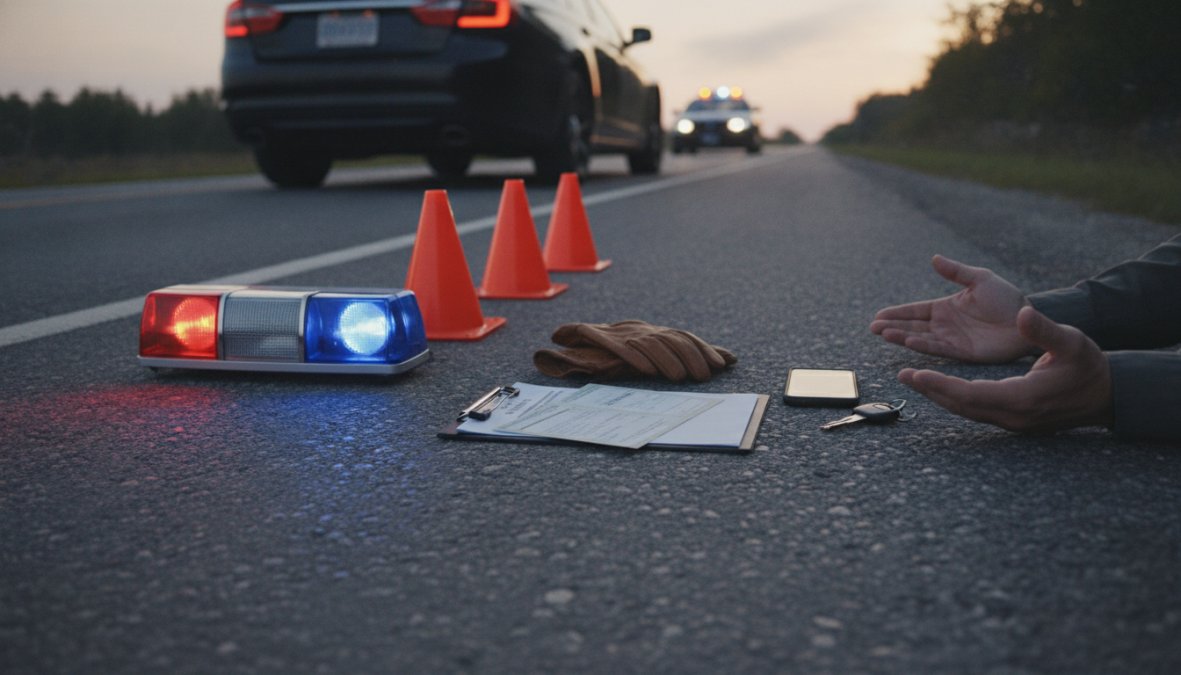
Once stopped, turn off your engine, roll down your window partially, and place both hands on the steering wheel where they're clearly visible. If it's dark, turn on your interior light. Before the officer reaches your window, assess the situation. Is this a marked patrol car or unmarked vehicle?
Identifying a Legitimate Law Enforcement Officer
An unmarked vehicle can be concerning because it's harder to verify the person approaching is actually law enforcement. Legitimate officers will display a badge and identification when asked. Don't hesitate to ask, "May I see your badge and identification?" If someone in an unmarked car cannot produce proper credentials, you have the right to request that a marked unit respond to verify their identity.
Step 2: What to Say During a Traffic Stop
Your words matter enormously. When the officer approaches, wait for them to speak first. Have your driver's license, vehicle registration, and proof of insurance ready.
Keep your language simple and direct. Say "Yes, officer" or "No, officer" rather than offering lengthy explanations or excuses. If asked why you were speeding, a simple "I apologize" is sufficient. Avoid being defensive or argumentative, even if you believe the stop was unjustified.
Many drivers over-explain or offer unsolicited information. Keep your answers direct and honest. If you don't know the answer, say so. If you're uncomfortable answering a particular question, you have the right to politely decline and ask if you're free to go.
Communication Best Practices
Tone matters as much as content. Speak in a calm, respectful voice. Avoid sarcasm, humor, or anything that could be misinterpreted as disrespect. Address the officer respectfully as "officer" or "sir/ma'am." Keep your body language open and non-threatening.
If the officer asks questions beyond the reason for the stop, such as "Where are you coming from?" you can answer briefly or politely decline. You have the right to remain silent on questions unrelated to the traffic violation. A simple "I'd prefer not to answer that" is sufficient and is not an admission of guilt.
Step 3: Providing Documents and Demonstrating Compliance
When asked for your documents, provide your driver's license, vehicle registration, and proof of insurance promptly. These are required and providing them is not optional.
If your documents are in your glove compartment, tell the officer where they are before reaching. Say, "My registration is in the glove compartment. May I reach for it?" This prevents misinterpretation of sudden movements.
If your license is suspended, expired, or if you're driving without a license, tell the officer immediately. Being upfront demonstrates honesty and cooperation.
| Document | Required | Where to Keep | Why It Matters |
|---|---|---|---|
| Driver's License | Yes | Wallet or accessible location | Proves your identity and driving privilege |
| Vehicle Registration | Yes | Glove compartment or visor | Proves vehicle ownership and insurance |
| Proof of Insurance | Yes | Glove compartment with registration | Required by law in all states |
Required Documents and What to Have Ready
Your driver's license must be valid. Vehicle registration must match the vehicle you're driving. Proof of insurance is mandatory in every state and can be a physical card, digital copy on your phone, or documentation from your insurance company. Keep it easily accessible.
If you have outstanding warrants or unpaid tickets, the officer may discover these during the stop. Being aware of your legal status before a traffic stop allows you to prepare mentally and know what to expect.
Understanding Your Rights During a Traffic Stop
You have constitutional rights during a traffic stop, even though you're not free to leave. The Fourth Amendment protects you against unreasonable searches and seizures. The Fifth Amendment gives you the right to remain silent.
The officer can ask you questions, but you don't have to answer all of them. You have the right to remain silent on questions unrelated to the reason for the stop. You can say, "I'd prefer not to answer that question" or "Am I free to go, or am I being detained?"
During a traffic stop, the officer can ask you to step out of the vehicle. This is lawful and you must comply. The officer can perform a pat-down search of your outer clothing if they have reasonable suspicion you're carrying a weapon. However, they cannot search your vehicle, belongings, or person without your consent or a warrant, with limited exceptions.
When an Officer Can and Cannot Search Your Vehicle
An officer can search your vehicle without a warrant only in specific circumstances: if you consent, if they have probable cause to believe it contains evidence of a crime, or if you're arrested. In a routine traffic stop, if the officer lacks probable cause and you haven't consented, they cannot search.
Many drivers don't realize they can refuse a vehicle search. If an officer asks, "Do you mind if I search your car?" this is a request, not a command. You can say no. Refusing a search is not an admission of guilt and does not give the officer the right to search without probable cause.
Refusing a Vehicle Search: Your Legal Options
If an officer asks to search your vehicle, say clearly and calmly, "I do not consent to a search of my vehicle." This statement protects your rights and makes clear that any search that follows is against your wishes.
If the officer searches anyway, do not physically resist or interfere. Resisting a search, even an unlawful one, can result in additional criminal charges. Your remedy for an unlawful search is to challenge it later in court. Document everything: the officer's name, badge number, the time, date, and what happened. If there are witnesses, note their information.
How to Decline a Search Respectfully
Declining a search doesn't have to be confrontational. You can say, "I appreciate you asking, but I'm not comfortable with a search. Am I free to go?" This is respectful but firm. If the officer insists they have probable cause and begins searching, remain calm and do not interfere. Clearly state, "I do not consent to this search," and comply with any orders. Your verbal objection creates a record that you did not consent, which is important for any legal challenge later.
After the traffic stop, write down everything that happened while it's fresh. Include the officer's name, badge number, agency, time, location, and detailed description of events. If arrested or charged, provide this information to your attorney immediately.
Traffic Stop Checklist: Key Actions and Reminders
| Phase | Action | Why It Matters |
|---|---|---|
| Before | Keep documents organized and accessible | Reduces fumbling and demonstrates preparedness |
| Before | Know your rights regarding searches and silence | Protects you from incriminating yourself |
| During | Pull over safely in a well-lit area | Shows compliance and ensures officer safety |
| During | Keep hands visible on steering wheel | Prevents officer from perceiving a threat |
| During | Provide required documents promptly | Demonstrates cooperation |
| During | Answer basic questions honestly but briefly | Avoids over-explanation that can be misinterpreted |
| During | Refuse consent to search if requested | Protects your Fourth Amendment rights |
| During | Remain calm and respectful | Reduces tension and prevents escalation |
| After | Document the officer's name, badge, and details | Creates a record if you need to challenge the stop |
| After | Contact an attorney if arrested or concerned | Protects your legal rights going forward |
Before, During, and After the Stop
Before a traffic stop happens, prepare yourself mentally and practically. Keep your documents organized and know your rights. During the stop, focus on the present moment. Your job is to be respectful, honest, and compliant with lawful orders. After the stop, take action if necessary. If you received a citation, you can pay the fine, contest it in traffic court, or consult an attorney. If arrested, do not answer questions without an attorney present.
Special Circumstances: Passengers, Disabilities, and Recording
Traffic stops involve more than just the driver. Passengers, people with disabilities, and the right to record all present special considerations.
What Passengers Should Know
Passengers have rights during a traffic stop, but those rights differ from the driver's. Passengers should remain calm and comply with the officer's orders. Don't reach into pockets or bags without permission. If a passenger is arrested, they have the right to remain silent and the right to an attorney. They should clearly state, "I want to speak to an attorney," and then remain silent.
If You Have a Disability or Medical Condition
If you have a disability, medical condition, or mental health condition affecting how you interact during a traffic stop, inform the officer early. If you're deaf or hard of hearing, tell the officer so they can communicate effectively. If you have autism, anxiety, PTSD, or another condition affecting your response to authority figures, consider carrying a disability identification card or informing the officer immediately.
Recording the Traffic Stop
You have the right to record a traffic stop, including audio and video, in most jurisdictions. Before you record, understand your state's laws. Some states require all parties to consent to audio recording, while others allow one-party consent.
If you want to record, tell the officer, "I'm going to record this traffic stop for my protection." Open recording is less likely to escalate the situation than hidden recording. Recording protects you by creating an objective record of what happened. However, recording doesn't change your obligations during the stop. You still must provide documents, comply with lawful orders, and follow the guidelines in this guide.
A traffic stop doesn't have to be traumatic or complicated. Understanding what to do during traffic stop situations, how to pull over safely, what to say, how to protect your rights, and how to handle special circumstances gives you the tools to navigate this encounter confidently. If you're facing charges from a traffic stop or believe your rights were violated, the experienced team at Coppins Law Group, PLLC can review your case and protect your rights. Contact Coppins Law Group, PLLC today for a free initial consultation to discuss your traffic stop and explore your legal options.
Frequently Asked Questions
What are my rights during a traffic stop?
During a traffic stop, you have several constitutional rights. You have the right to remain silent beyond providing your driver's license, registration, and proof of insurance. You can refuse a vehicle search without probable cause, simply state clearly, 'I do not consent to a search.' You also have the right to ask if you're free to leave. However, you must comply with lawful orders from the law enforcement officer, such as exiting your vehicle if requested. If you believe your rights were violated, note details and consult legal counsel about your options.
Can police search my car without my consent during a traffic stop?
No, law enforcement cannot search your vehicle without probable cause or your consent. If an officer asks to search, you can refuse by stating, 'I do not consent to a search.' Probable cause means the officer has reasonable suspicion of illegal activity, such as visible contraband or a strong odor of drugs. Without probable cause, refusing a search is your legal right. If an officer searches anyway, document what happened, note the officer's badge number and name, and discuss the search with an attorney to determine if your rights were violated.
What should I do if I'm a passenger during someone else's traffic stop?
As a passenger, remain calm and keep your hands visible. You must comply with the officer's verbal instructions. You also have the right to remain silent and don't need to answer questions about the driver or yourself beyond providing identification if requested. Stay in the vehicle unless the officer instructs you to exit. If you're asked to exit, do so slowly and deliberately. Avoid sudden movements or reaching into pockets. If you believe your rights were violated or you were treated unfairly, take note of the officer's details and discuss the incident with legal counsel.
Is it legal to record a police officer during a traffic stop?
In most jurisdictions, you have the right to record law enforcement officers during a traffic stop if you're in a public space. However, laws vary by state and location. If you choose to record, do so discreetly and inform the officer if asked directly. Keep your phone or recording device in a safe place, don't hold it in a way that appears threatening. Recording can provide valuable documentation of the encounter, but prioritize your safety and compliance with the officer's instructions first. Never use recording as an excuse to refuse lawful commands or become confrontational.